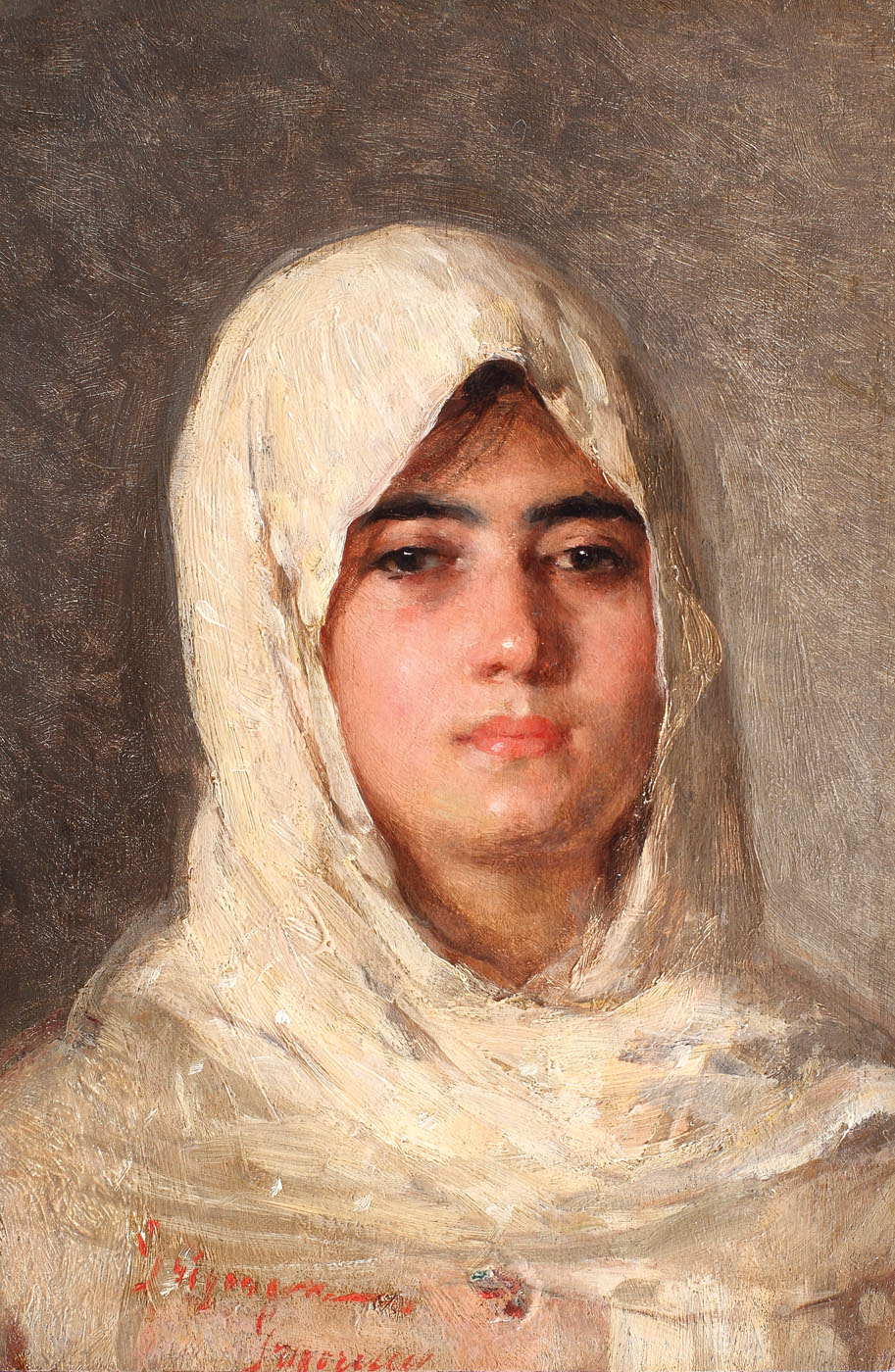

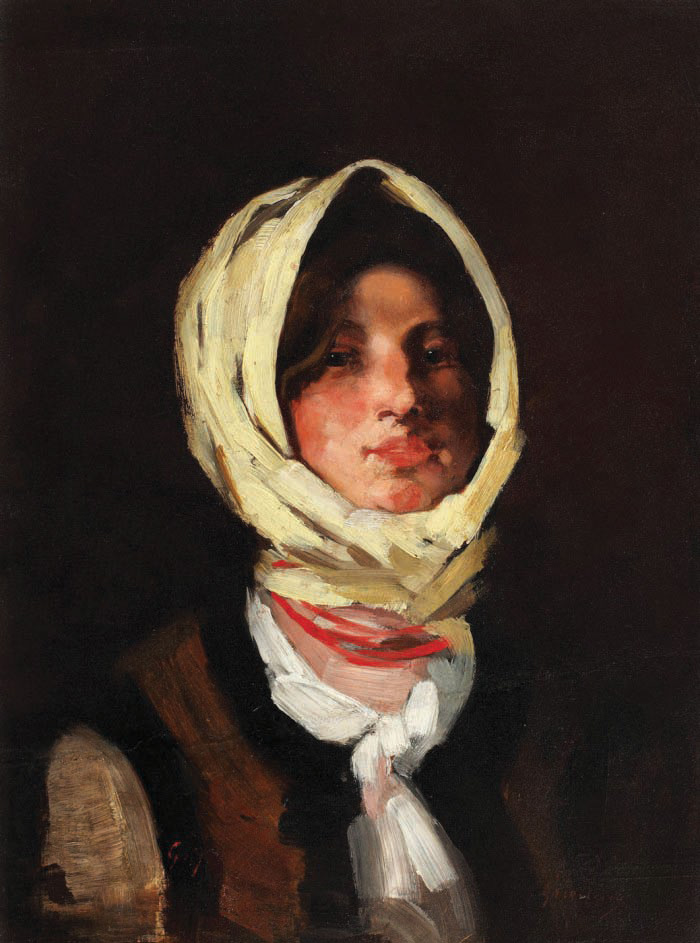
27. Peasant Woman with White Headscarf
1838, Pitaru, Dâmboviţa - 1907, Câmpina

Estimate

EUR 25.000 - 45.000

Sold

EUR 42.500

Session

Tue, 6 February 2018 19:30

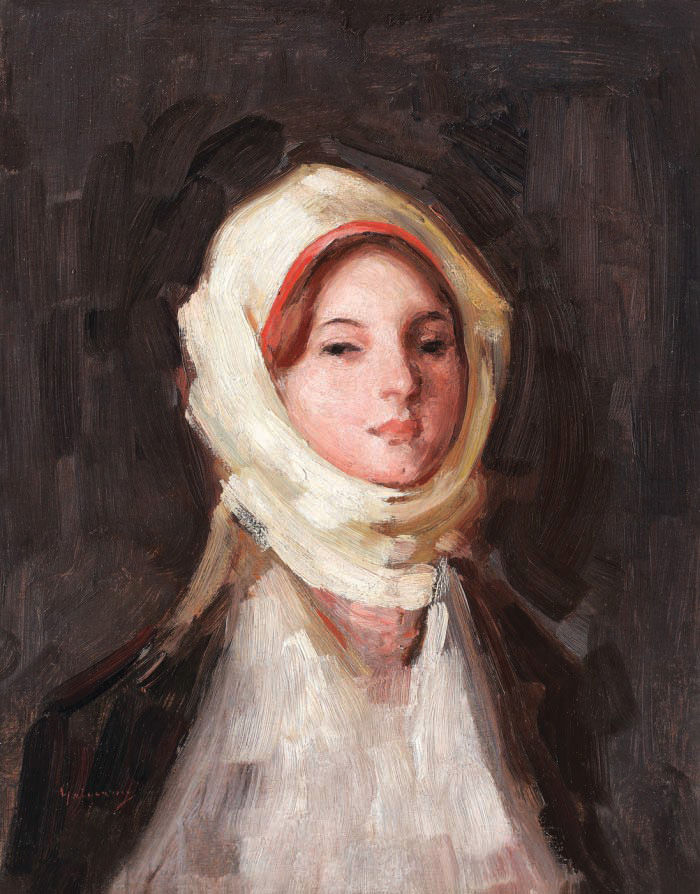
We cannot speak of a portrait body of works in the case of Nicolae Grigorescu, but the approach of the subject is obviously encountered in all his stages of creation. Managed perhaps around self-portraits, the appearance of this type of painting on Grigorescu's canvases can be identified as early as during his first years of work, when he was an icon painter. His famous self-portrait as a saint, dating back to his training period, then those self-portraits made during his studies in Paris, created in 1863 and 1864, show us the painter has dealt with portraits from the very beginning of his creation. Later, over the years, mastering the entire pictorial register helped Grigorescu approach other portraits. The recognition of his portraitist qualities was confirmed as soon as the painter made the "Portrait of the Great Ban Năsturel Herescu", a work commissioned by the Council of the Civil Hospitals at the end of 1869 or in the spring of 1870. This portrait was joined by those of Alexandru Dimitrie Ghica, Grigore I Ghica and Grigore IV Ghica, once again for the Council, but the celebrity and success brought by Năsturel's portrait allowed Grigorescu to receive plenty of commissioned works, as the portrait was the easiest method to make immediate financial profit at the time. Thus we can explain the semi-official portraits made for the Şuţu family or for General Magheru. Afterwards, he made portraits of friends and acquaintances - the Dona and Urechia families, Bernath, Dimitrie Grecescu, Marcovici, or the portrait of collector George Bellu; after 1875, Grigorescu began to introduce rural faces in his paintings. The faces of women in Rucăr, Muntenia and of French peasant women replace the faces of the painter’s dear ones, so as to develop a new type of portrait (sometimes in composition), that is, the one extracted from a quasi-ethnographic spirit. Thus, in a Grigorescu gallery, filled with heads dressed with "white headscarves", important works from the period 1880-1907 can be integrated: "Peasant Girl with Headscarf" (National Museum of Art of Romania, inv.3317), "Girl’s Head" (Craiova Art Museum, inv. 738), "Girl with White Headscarf" (Ploieşti Art Museum / N.Grigorescu Câmpina Museum, inv.92831), etc. The serene face of the peasant, made in the artist’s typical manner, reveals an artist interested more in the expression of the model - the physiognomy shows Grigorescu's increased attention. The fine brushstrokes build the gaze and the entire expression in a realistic composition – the light, the colour of the lips, the slight pallor of the cheeks or the carefully modelled hair strands coming out from underneath the headscarf.

References

NICULESCU, Remus „Expoziţia Nicolae Grigorescu, catalog” de, Muzeul de artă al Republicii Populare Române, Bucureşti, 1957 Vasile, „Nicolae Grigorescu”, Ed. Meridiane, București, 1973 VLAHUȚĂ, Alexandru, “Pictorul N.I.Grigorescu.Vieaţa şi Opera lui”, Bucureşti, Ediţia Casei Şcoalelor, Socec, 1910

Dimensions

width 16 cm, height 24.5 cm, custom 16x24,5

Description

oil on wood, signed twice lower left, in red, "Grigorescu"

Research information

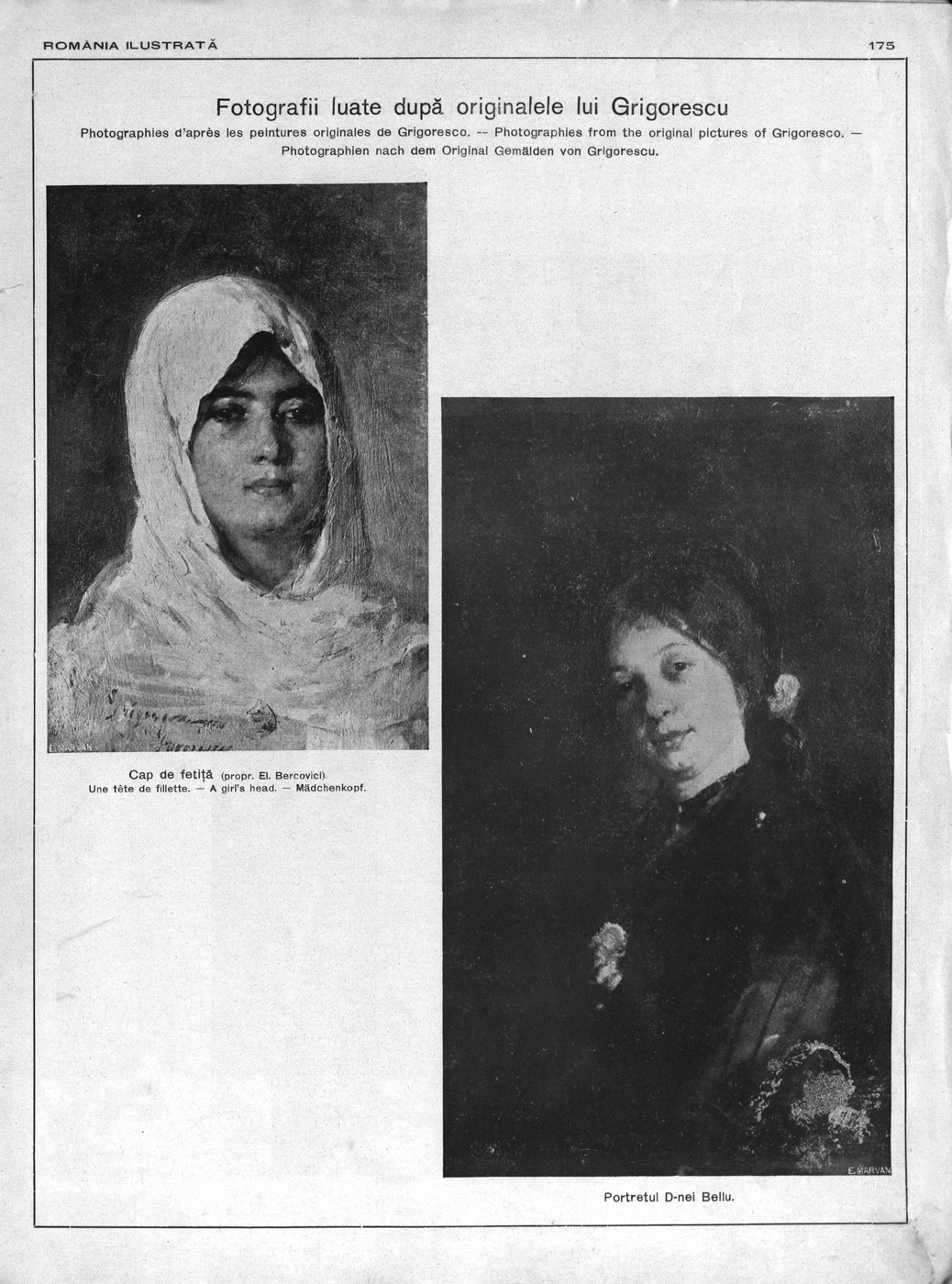
Opera este reprodusă în "România Ilustrată", anul III, nr. 11, 1928, la pag. 175.

PROVENANCE

colecția interbelică Eli Bercovici, președinte al Comunității evreiești în jurul anului 1930.

ADDITIONAL INFORMATION

For clarifications regarding the bidding procedure, hammer price costs, guarantee, payment, and collection terms for the winning lot, we recommend carefully reading/re-reading the Bidding Regulations.

For additional information regarding the lot and the auction, please contact the Art Consultants Department.

Similar lots