


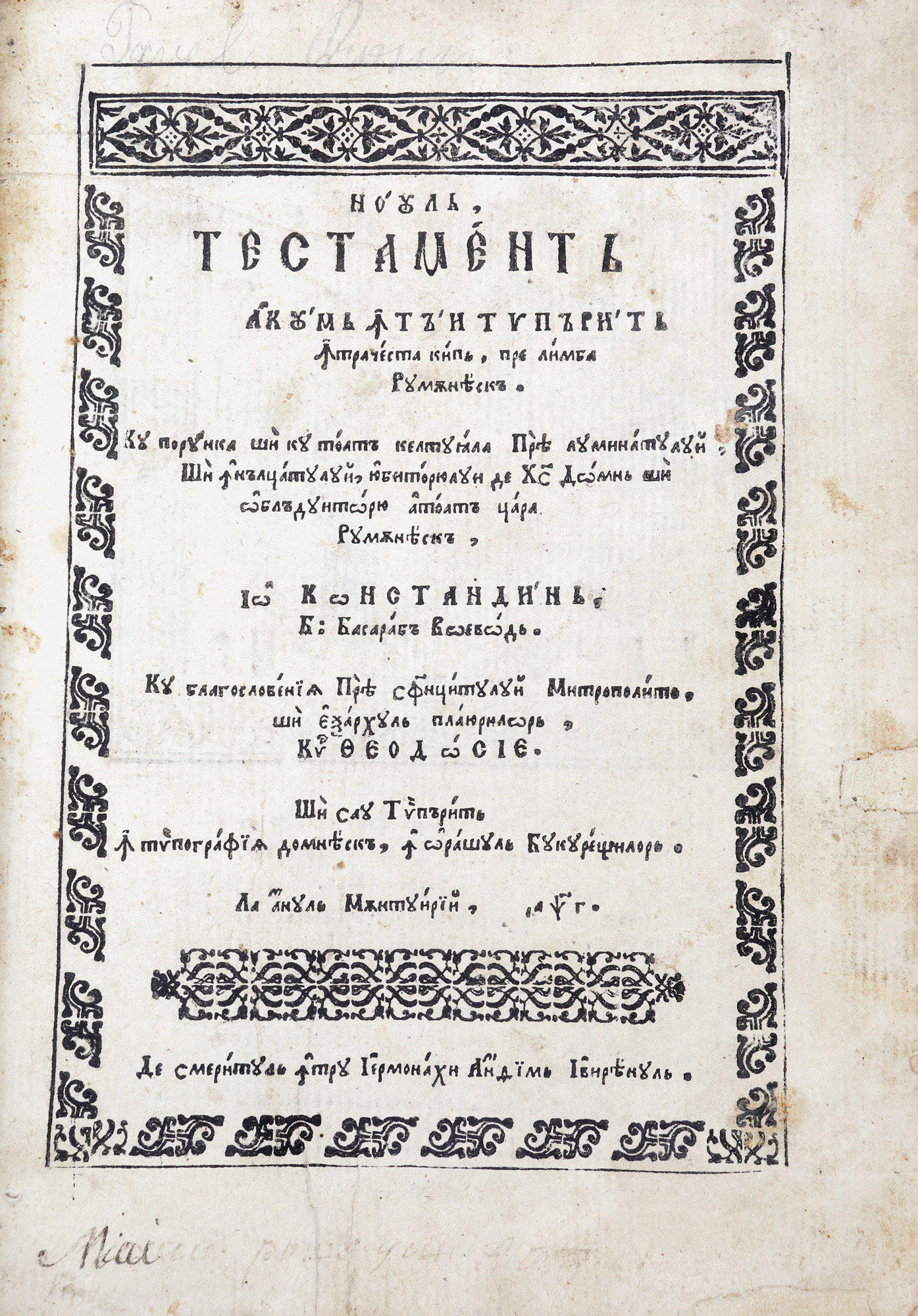
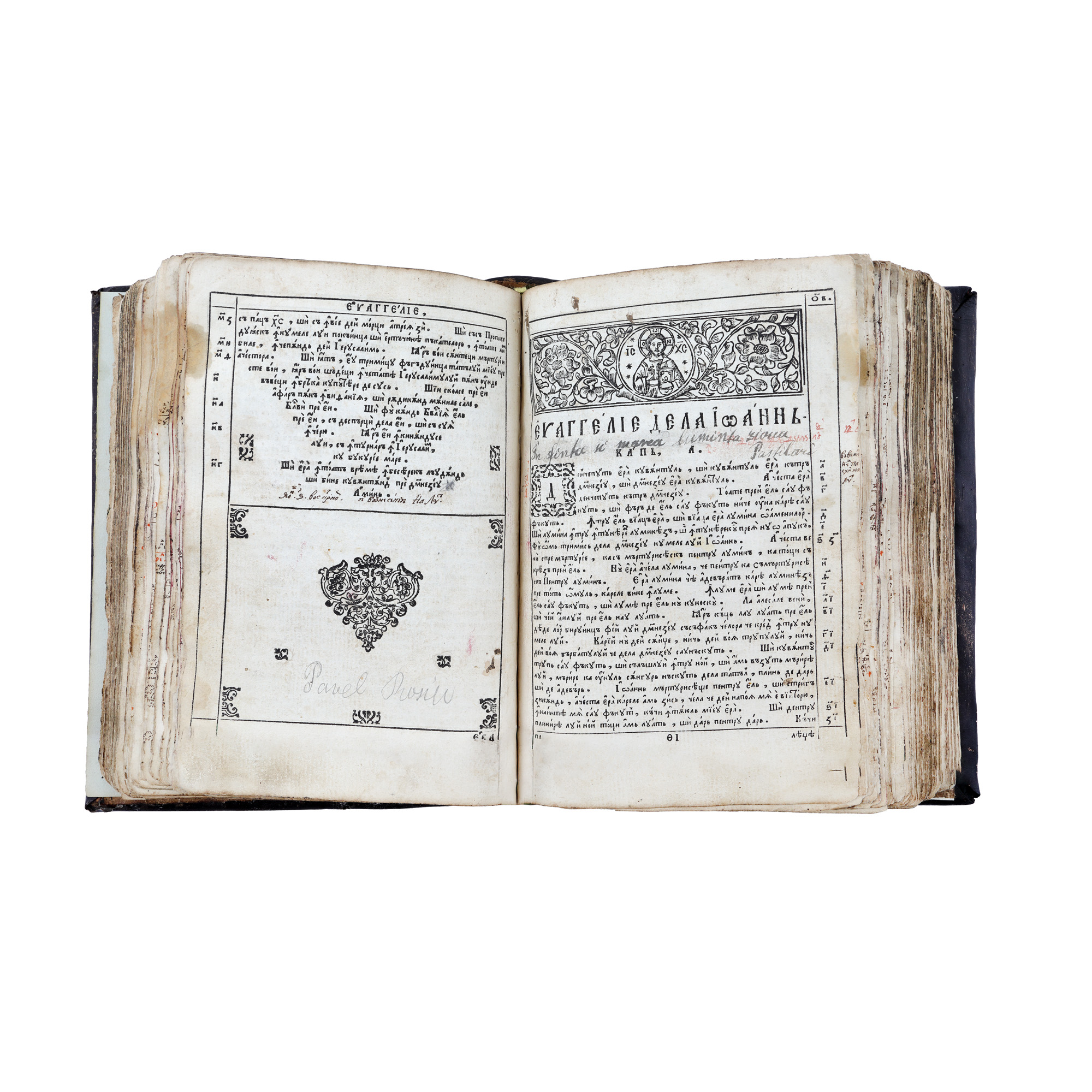
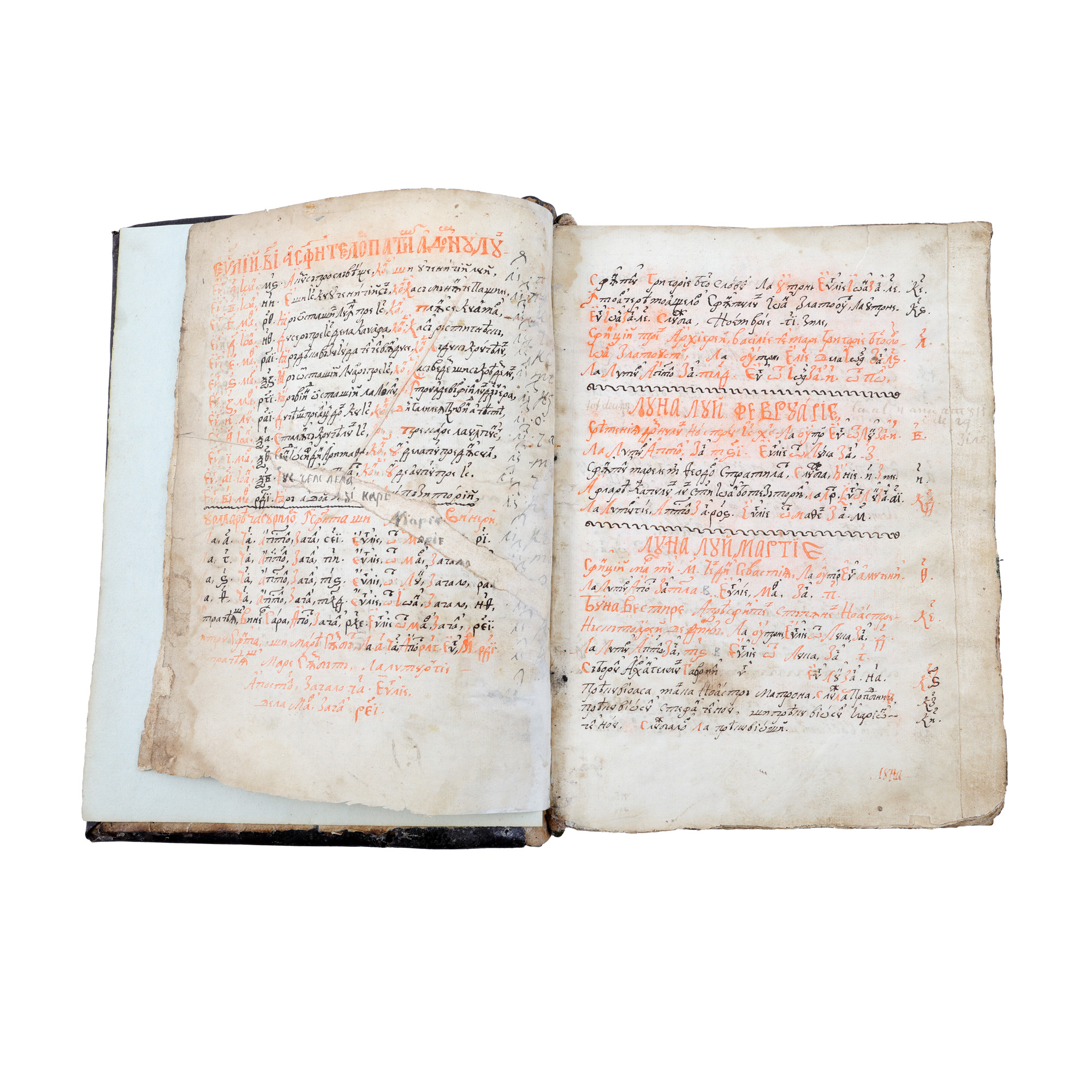
6F. Connected Sbornic (18th century manuscript) and "The New Testament" of Antim Ivireanul, from the time of Constantin Brâncoveanu, Bucharest, 1703, extremely rare, collector's piece
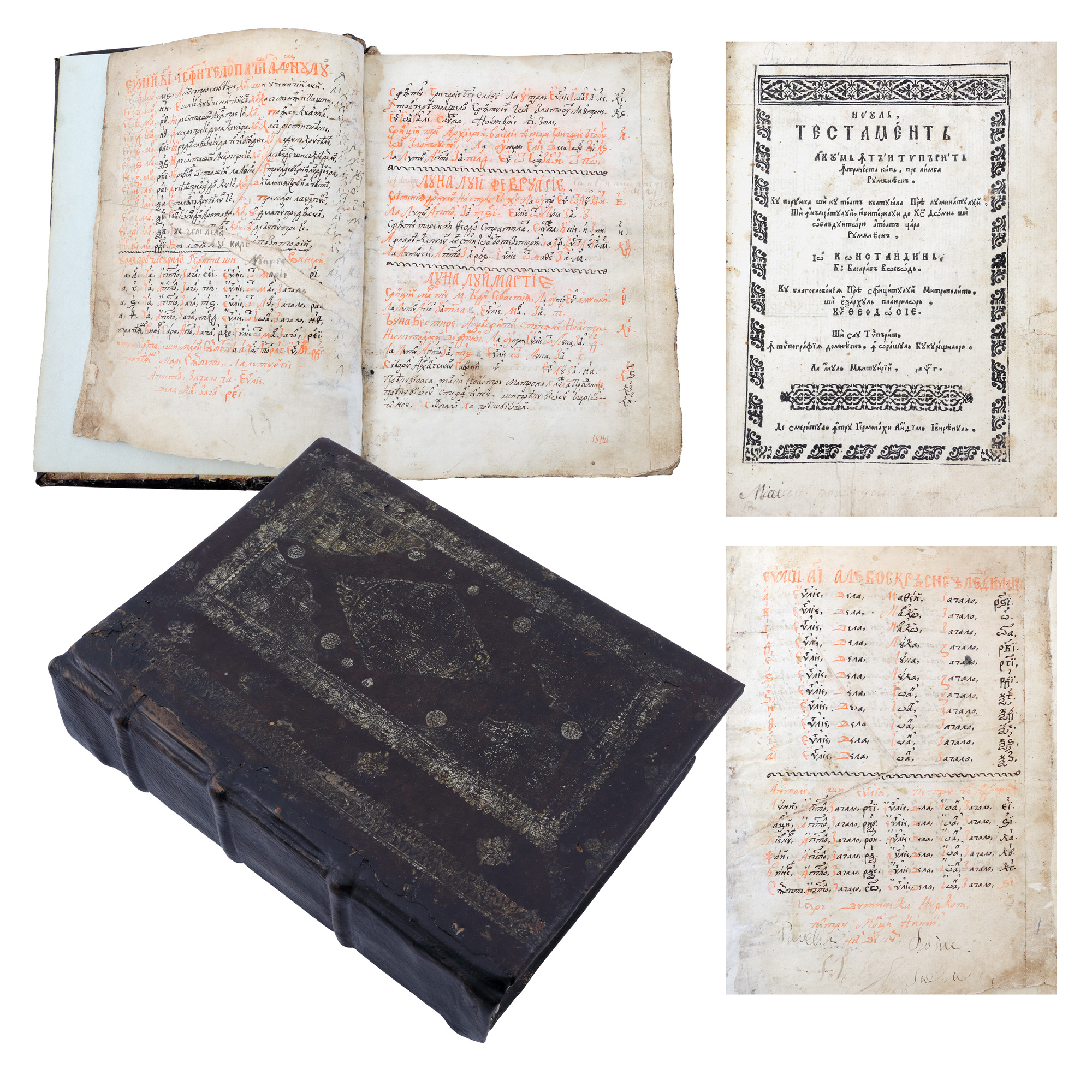
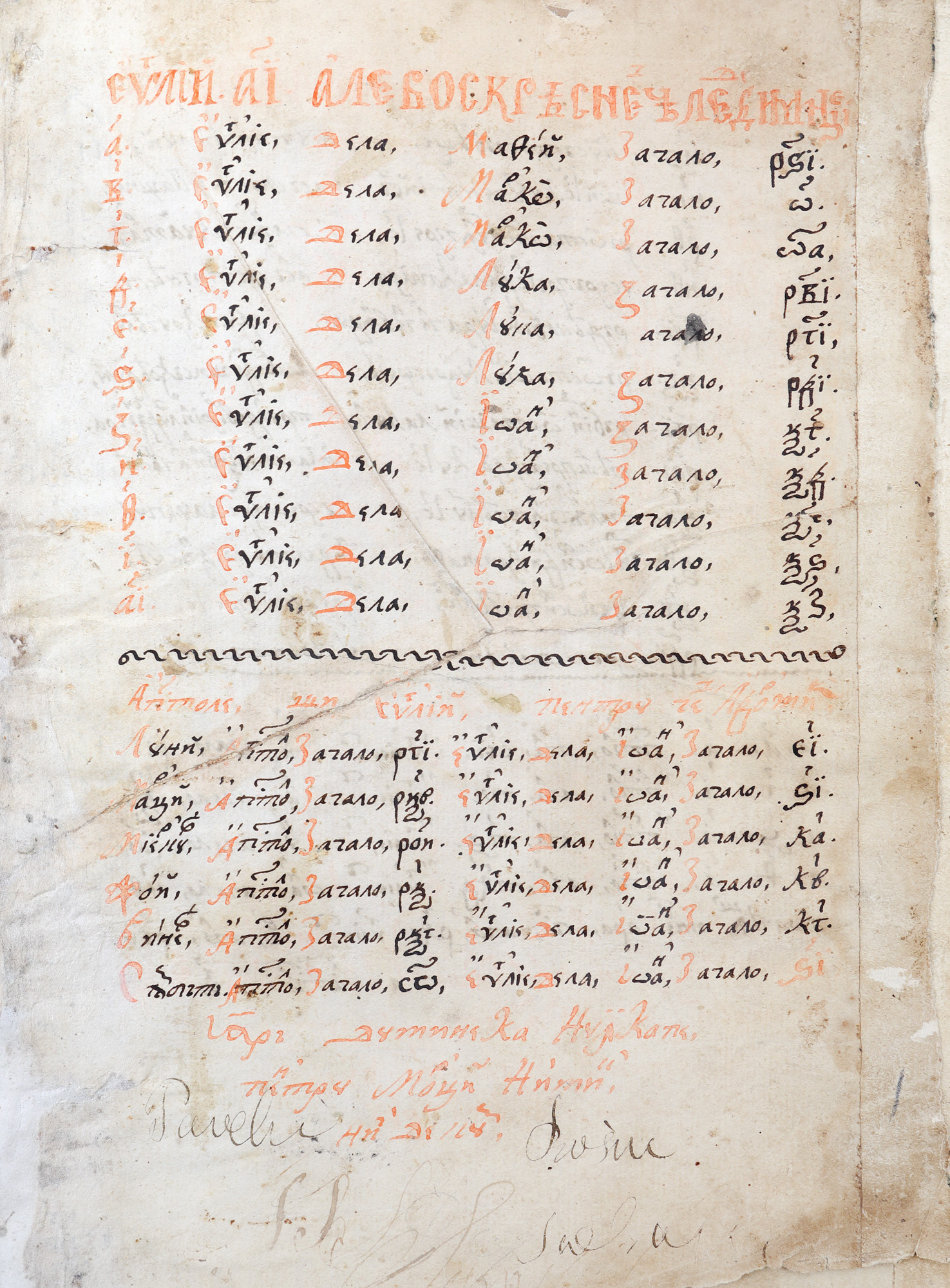
The photos of the lot are informative and indicative, and cannot provide a highly detailed view of the object from all angles. We recommend a careful physical inspection of the lot before bidding.
6F. Connected Sbornic (18th century manuscript) and "The New Testament" of Antim Ivireanul, from the time of Constantin Brâncoveanu, Bucharest, 1703, extremely rare, collector's piece
Starting price:
EUR 1.500
Sold
EUR 3.500
References
BRV, I. p. 139
24 x 17 cm
Research information
Antim Ivireanul, born in 1650, is of Georgian origin but his journey within Orthodoxism brought him to the mouths of the Danube, in Wallachia. Before this period, he lived near the Ecumenical Patriarchate in Constantinople, where he penetrated the mysteries of faith as well as those of the typographic craft in all its details, from writing, to paper making and xylography. Imbued in the erudite and cultivated atmosphere and environment patronized by the Orthodox Patriarchate, he learned several languages, Greek, Turkish-Ottoman and Arabic. The one who brought him north of the Danube was ruler Constantin Brâncoveanu who entrusted him with the development and management of the royal typography in Bucharest in 1691. Extremely active and dedicated to both books and the church, he held several ecclesiastical dignities crowned with that of Metropolitan of Wallachia in which he was installed in 1708. Using the authority that he had and the funds to which he had access, he developed the network of typographies in the country, with one in Râmnicu Vâlcea and one in Târgoviște. Through the numerous church works that he edited and supervised, Antim Ivireanul created the church language in Romanian and put into circulation the foundational works of orthodoxism transposed into a Romanian version. Exiled from the country as a result of his opposition to the Phanariot regime, he was assassinated on his way to Constantinople in circumstances still not fully elucidated. He was canonized by the Romanian Orthodox Church in 1992.
The New Testament in Romanian, printed entirely at the expense of Lord Constantin Brâncoveanu and with the support of Metropolitan Theodosie, the typographer being Antim Ivireanul. 2f.nen +209 pages, book block size 22,5 x 16 cm., framed text, 35 lines per page, black print, typographical ornaments, ornate black initials, the coat of arms of Constantin Brâncoveanu on the verso of the title leaf. At the end of the Gospel of Luke - a final fitomorphic vignette, and at the start of the Gospels - a fitomorphic frontispiece with a medallion featuring a Face of Jesus. The New Testament is preceded by 14 manuscript pages in black and red representing some compilations in Romanian.
Ownership note from Priest Ioan at page 93, a note about the New Testament dated 1795, December 18th, on the last verso.
For clarifications regarding the bidding procedure, hammer price costs, guarantee, payment, and collection terms for the winning lot, we recommend carefully reading/re-reading the Bidding Regulations.
For additional information regarding the lot and the auction, please contact the Art Consultants Department.
SESSION
Brought to you by
Similar lots
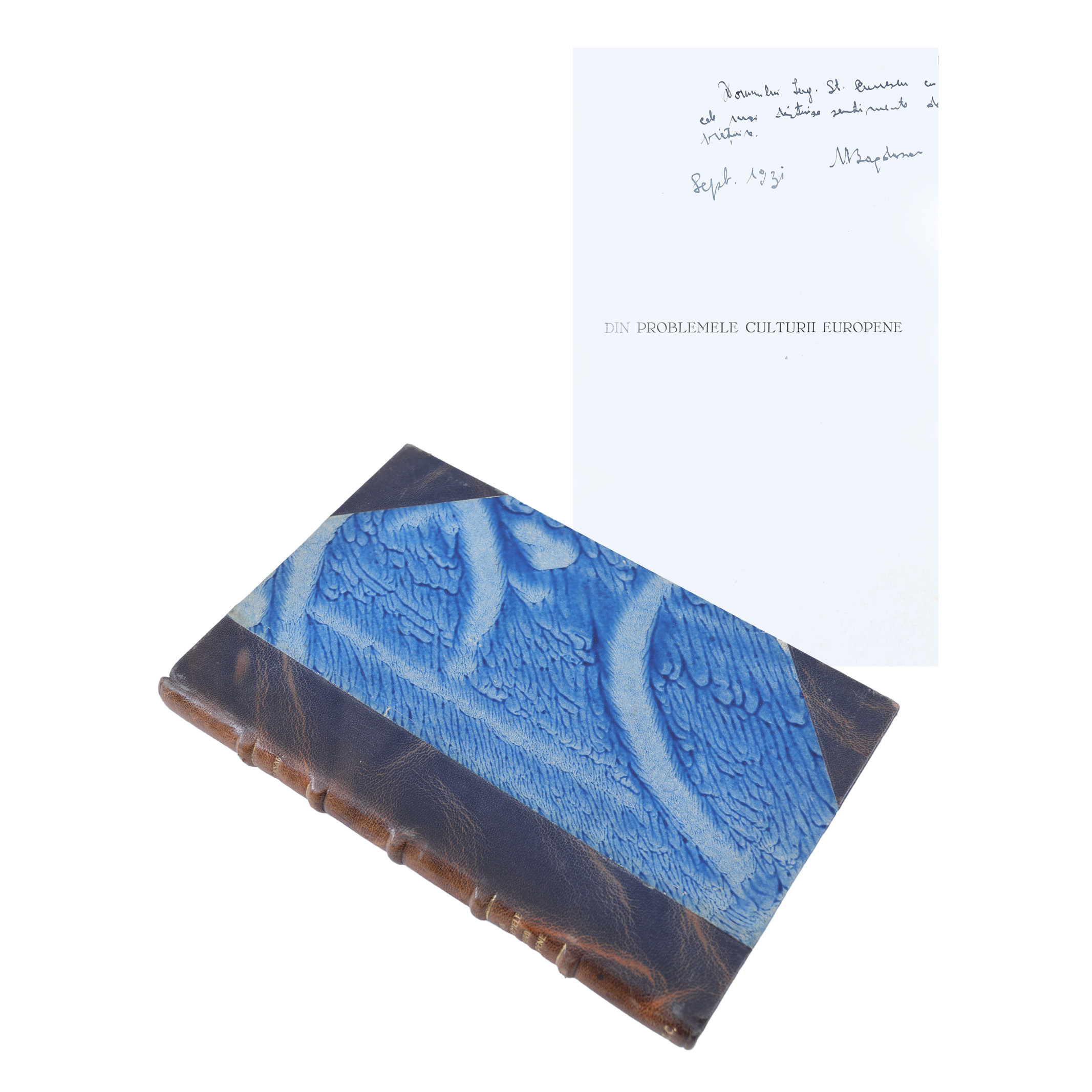
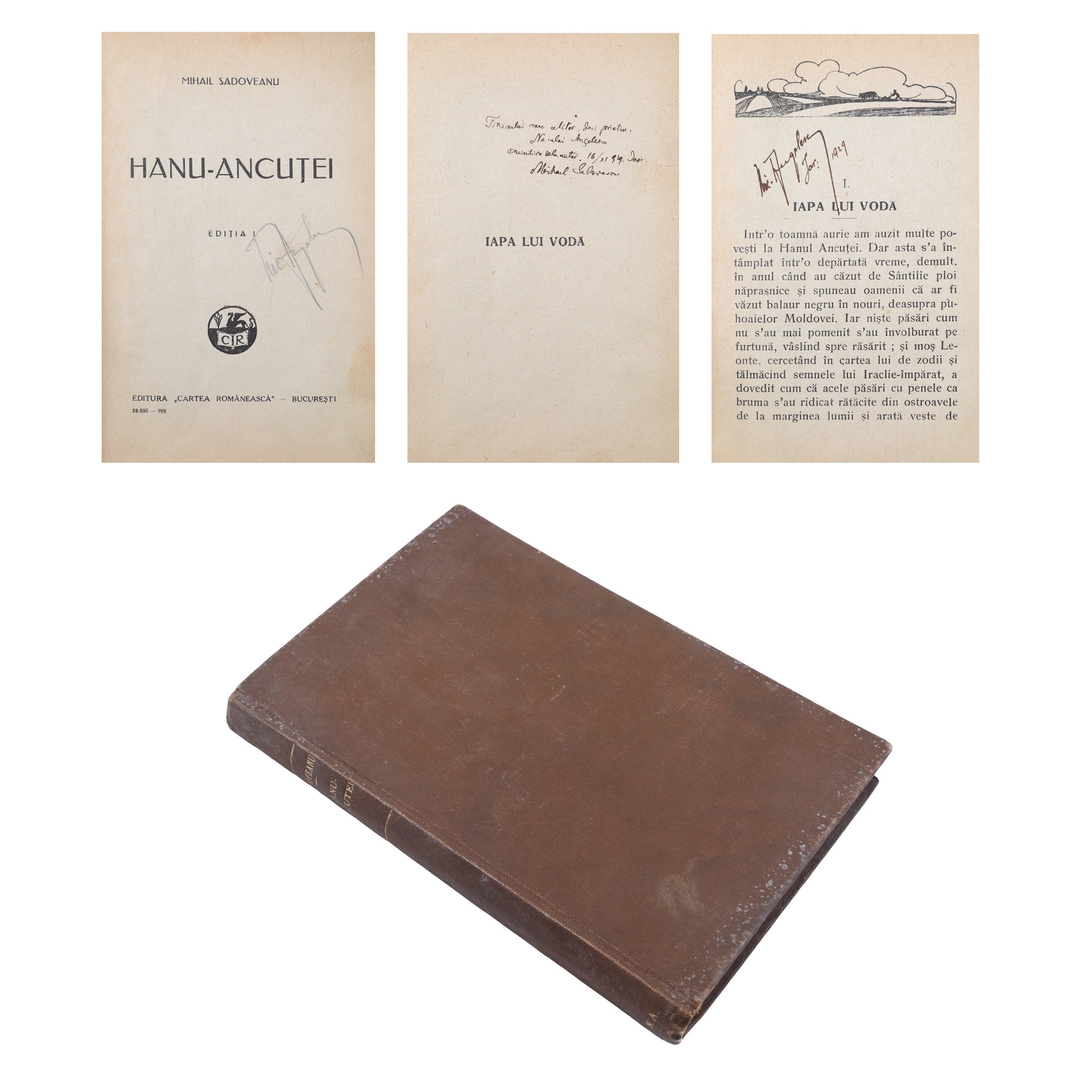
61. "Hanu-Ancuței" by Mihail Sadoveanu, Bucharest, 1928, with dedication and the author's holograph signature
Starting price:
EUR 100
Sold
EUR 300
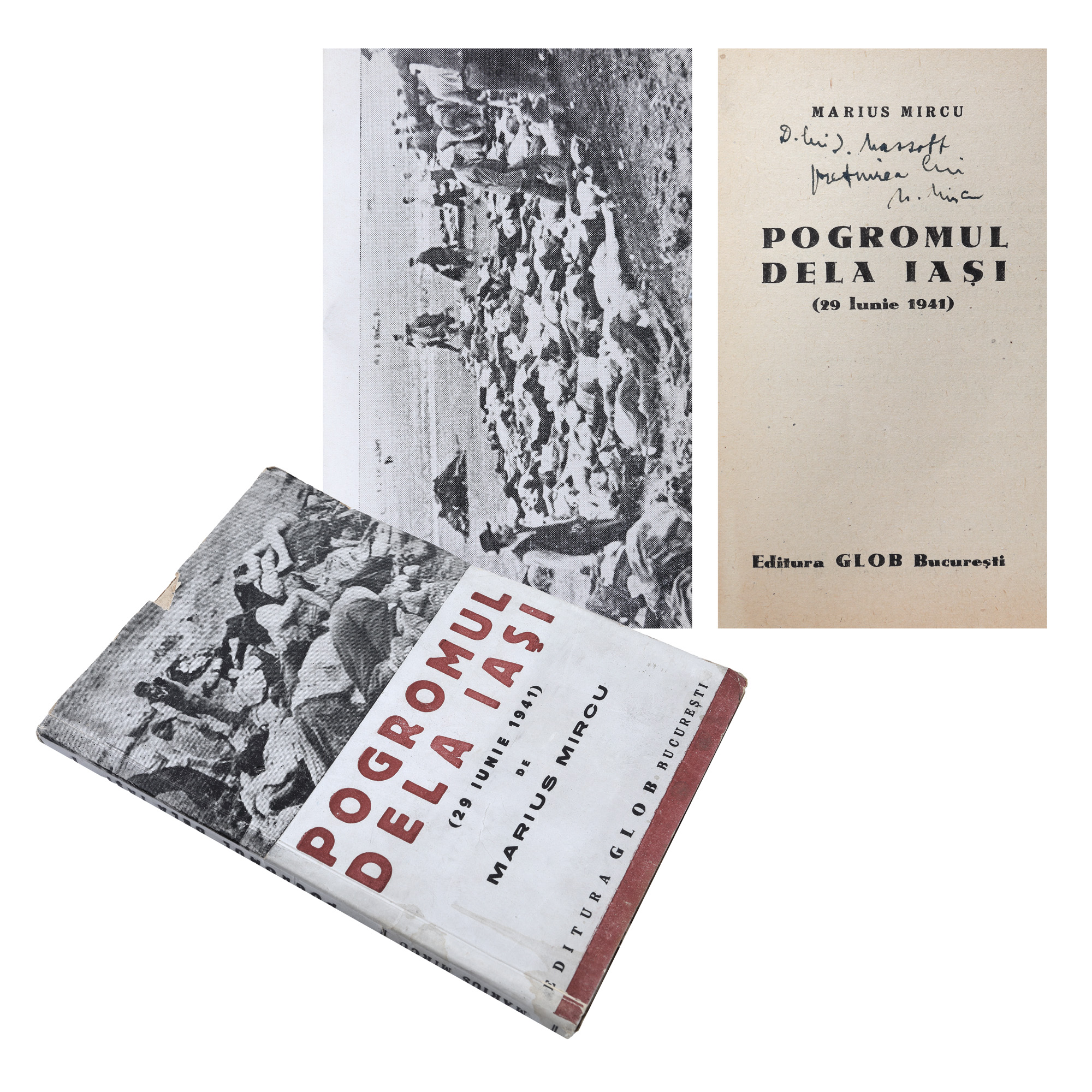
46. "The Pogrom of Iași", by Marius Mircu, Bucharest, 1941, with the author's dedication
Starting price:
EUR 150
Sold
EUR 150