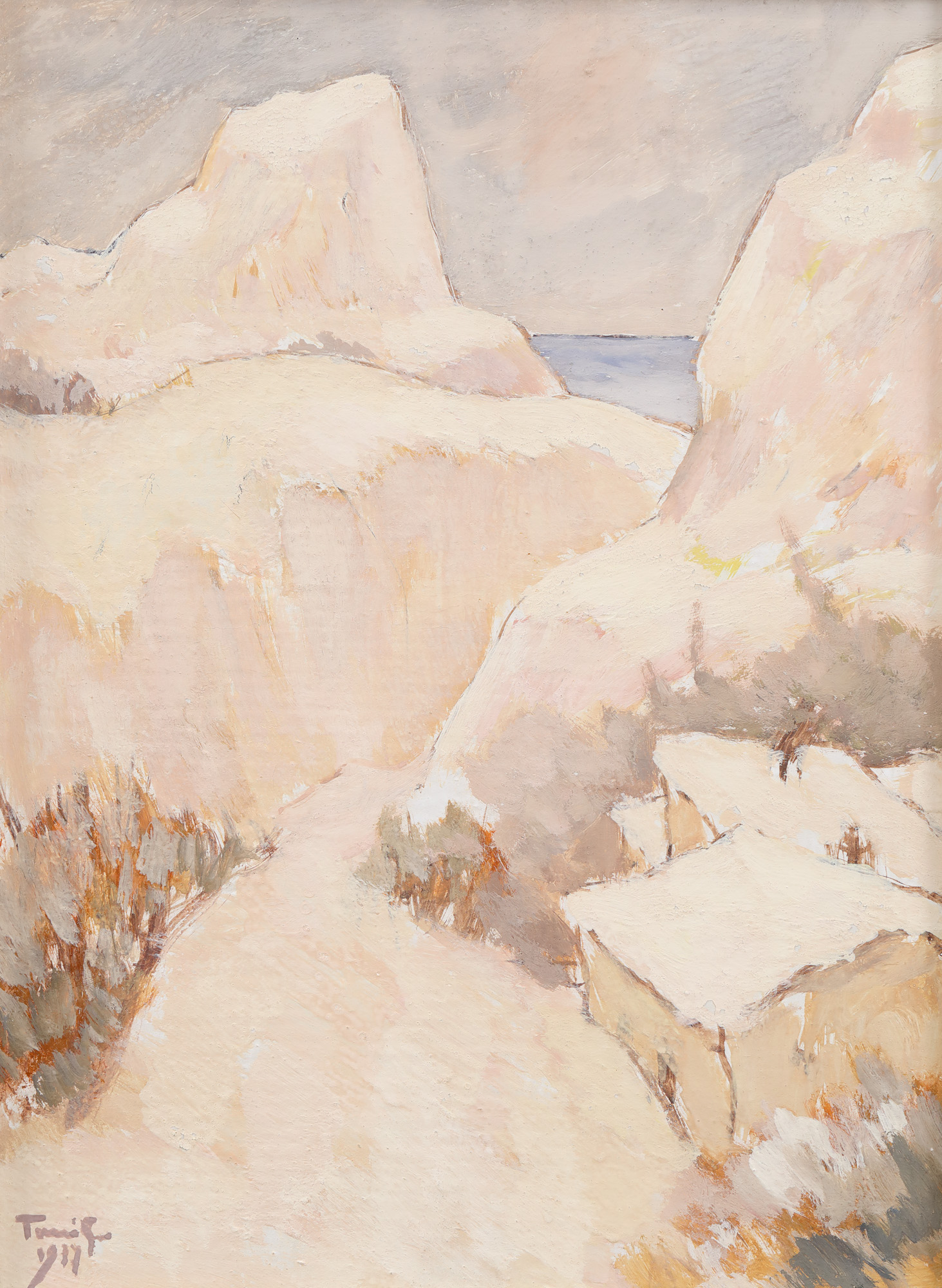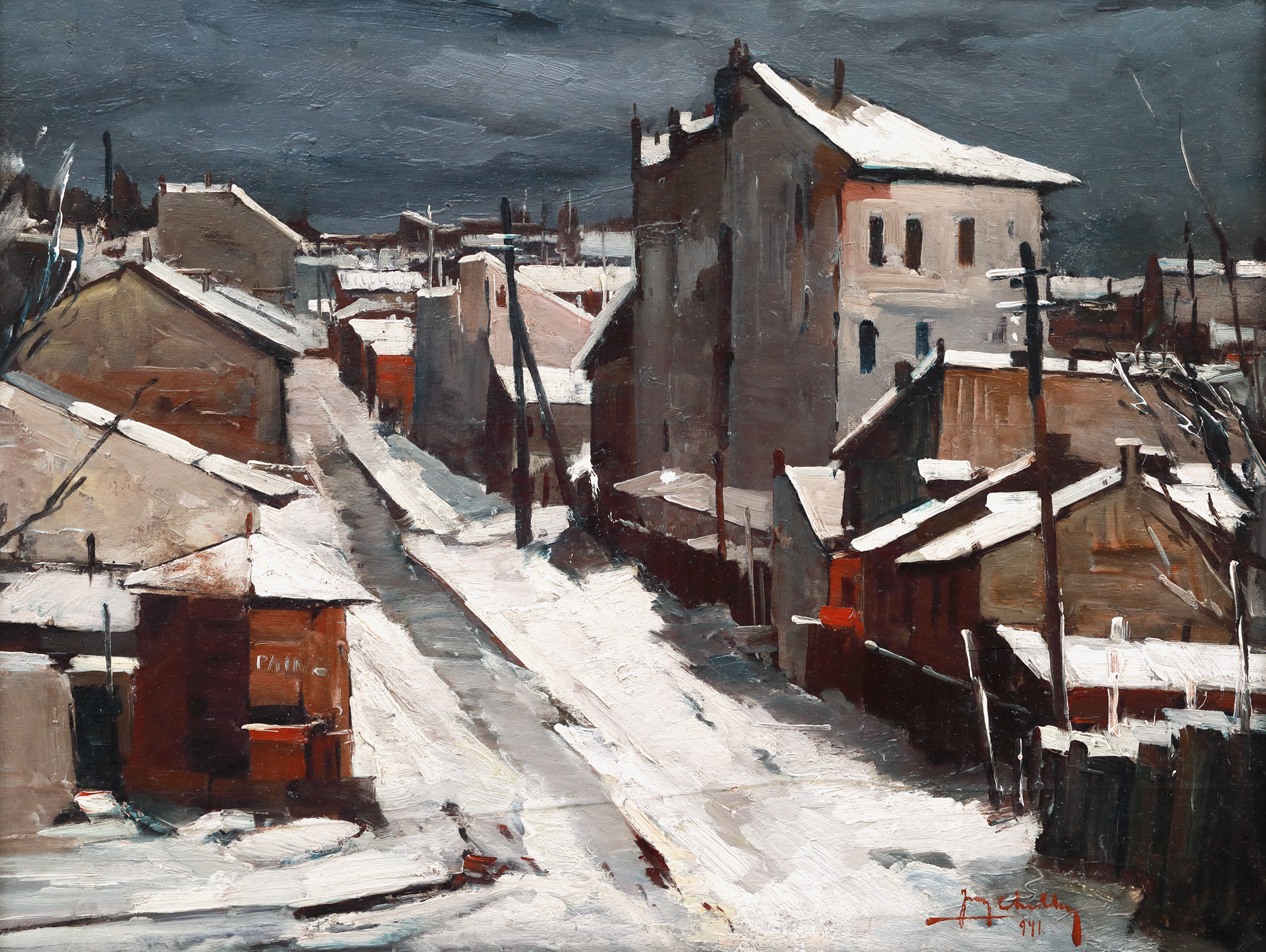

23. White Afternoon (Balcic) [1937]

1886, Bârlad - 1940, Bucureşti

Estimate

EUR 8.000 - 15.000

Sold

EUR 20.000

Session

Tue, 18 June 2024 19:00

The year 1925 marks the moment Nicolae Tonitza met the small Black Sea settlement of Mangalia - a location to which the artist would return, year after year, until 1930. His periodical return to the Dobrogea region opens the way to a vast journey through landscapes, among which we primarily distinguish the torrid shore flooded by the sun. In his radio intervention in 1932, transposed into a vast essay totaling no less than twelve pages, Tonitza emphasizes the importance of the "innovator" painter in revealing and popularizing spaces that later enjoy a prodigious reputation. He thus insists on promoting the concept of artist-tourists in search of unexplored places, which they could inaugurate, for the first time, in their specific pictorial manner. Nicolae Tonitza reveals himself, therefore, with equal passion, both in painted or drawn work, as well as in written work. The correspondence of the two will result in common means and spheres of equivalent interest in representing the artist's reality. Art critic Tonitza reserves the right to return, in writing, to his already configured plastic work. His comments are meant to outline, explain, or enhance the painter's or draftsman's creative potential. Thus, an analytical duplication takes place, whose ultimate goal consists in creating art for art, art for the people, but also art for oneself. Dobrogea remains, for the artist, one of the most picturesque provinces, but through its ethnic approach, it has the most diminished Romanian specifics. Being an analytical spirit, the artist will identify unprecedented solutions in illustrating spatial depth and will opt for dividing the canvas into multiple plans. Rocks, sky, and sea will follow each other in an extraordinary alternation, revealing approximations and distances faithful to reality. The mirage of the eastern world will give a special rhythm to the creations made in Balcic, and the sinuous arabesques of the lines will appear more and more often in the work specific to this period. The wide surfaces, made in oil, enjoy the translucent light of the gulf, which the artist applies in repeated layers of white. In the present work, Tonitza achieves a true pictorial transcription of the Black Sea shore space. He admirably introduces black accents, which contribute to emphasizing the materiality of the represented nature. The contrasts are reduced to a minimum, human characters are non-existent, and what prevails in his creation attributed to this period is the most accurate representation of reality. Thus, the artist will pass the seascape through his own filter and transpose it onto the canvas with the skill of a draftsman and the careful use of the painter's brush.

References

TONITZA, Nicolae, "Mangalia described in words", 1932, "Radio University", handwritten text, SSR Archive, file 11/1932. ȘORBAN, Raul, "Nicolae Tonitza", Meridiane Publishing, Bucharest, 1965. Florica Cruceru, Doina Păuleanu, Simona Urziceanu, "The Work of Nicolae Tonitza in the heritage of the Art Museums of Constanța and Topalu", Bucharest, 1979. BREZIANU, Barbu, "N.N. Tonitza", Meridiane Publishing, Bucharest, 1986.

Dimensions

width 28.5 cm, height 40 cm

Description

Gouache and oil on cardboard, signed and dated bottom left, in grey, "Tonitza, 1937"

Dating

1937

ADDITIONAL INFORMATION

For clarifications regarding the bidding procedure, hammer price costs, guarantee, payment, and collection terms for the winning lot, we recommend carefully reading/re-reading the Bidding Regulations.

For additional information regarding the lot and the auction, please contact the Art Consultants Department.

Similar lots