
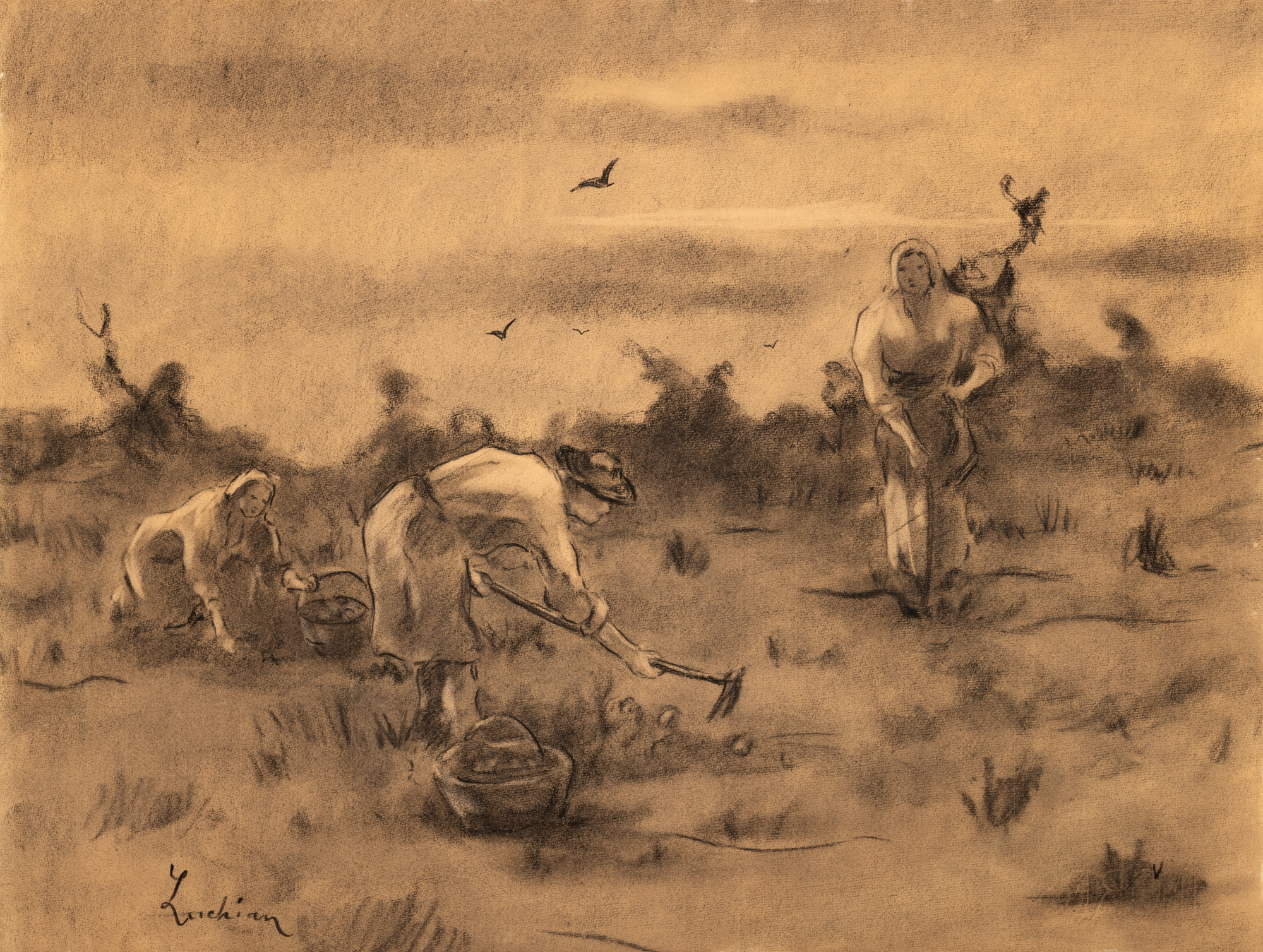
122. Potato Harvesting [1907-1910]

1868, Ştefăneşti - 1916, Bucureşti

Selling price

EUR 18.090

Session

Tue, 21 October 2025 17:30

Ștefan Luchian studied simultaneously Fine Arts and Conservatory. His courses under the guidance of Theodor Aman and Gheorghe Tattarescu provided the necessary framework for acquiring knowledge in drawing, which he will apply in depicting the features of the characters. The period 1903-1910 is important for his full artistic maturity, when he returns to rendering painting in the midst of nature. Thus, due to his advanced health condition, he will leave behind the city's turmoil and prefer to depict nature, the rural area, the works of the Romanian villages and agriculture. The summer months he spends in Brebu, Govora or Filipeștilor-de-Pădure will be fundamental for the artist and his work, due to the tranquility he will encounter there, landscapes and rural scenes he will create in charcoal, with a few examples being "Ox Cart" or "Mowing", which can be observed in the National Museum of Art of Romania. Compared to other artists who represented similar themes as this, there is also the Dutch artist Vincent van Gogh who also painted scenes from peasant life especially during the Nuenen period, between 1883 and 1885, a period in Holland where he focused on rural subjects, the connection of peasants with the land and other characters of the working class. This period is known for its dark and gloomy tones as well as for the realistic portrayal of the harsh rural life of those times. Stylistically, his works in this genre were intended to depict the harsh reality of rural life and "the fact that through their honest work they managed to earn their food". One of the most representative graphic creations of the artist from the Hague School period, is "The Carrot Picker", which is characterized by the exclusive interest in social and agricultural work themes, a work capturing in the foreground a female character dressed in Dutch period costume with bonnet, bent forward, pulling carrots out of the ground with a shovel. Thus, observing Van Gogh's creation mode within these social themes he approached, we can better understand the work that Luchian performed. Also, we can deduce that both artists were attracted to social issues, rural themes, villagers and peasants working the land in those times to earn a living. Both Luchian in his way of creation and Van Gogh wanted to best capture people's activities, occupations as well as features to provide viewers with a clearer image of the social problems and differences they faced and that these activities were an essential source in the life of the village and the family.

References

CIOFLEC, Virgil, "Luchian with 60 illustrations", National Culture, Bucharest, 1924. COMARNESCU, Petru, "Luchian", second edition, Youth Publishing House, Bucharest, 1965. LASSAIGNE, Jacques, "Stefan Luchian", Meridiane Publishing House, Bucharest, 1972.

Dimensions

width 62 cm, height 47.5 cm

Description

cărbune pe hârtie lipită pe carton, signed bottom left, in charcoal, "Luchian"

Dating

1907-1910

ADDITIONAL INFORMATION

For clarifications regarding the bidding procedure, hammer price costs, guarantee, payment, and collection terms for the winning lot, we recommend carefully reading/re-reading the Bidding Regulations.

For additional information regarding the lot and the auction, please contact the Art Consultants Department.

Similar lots

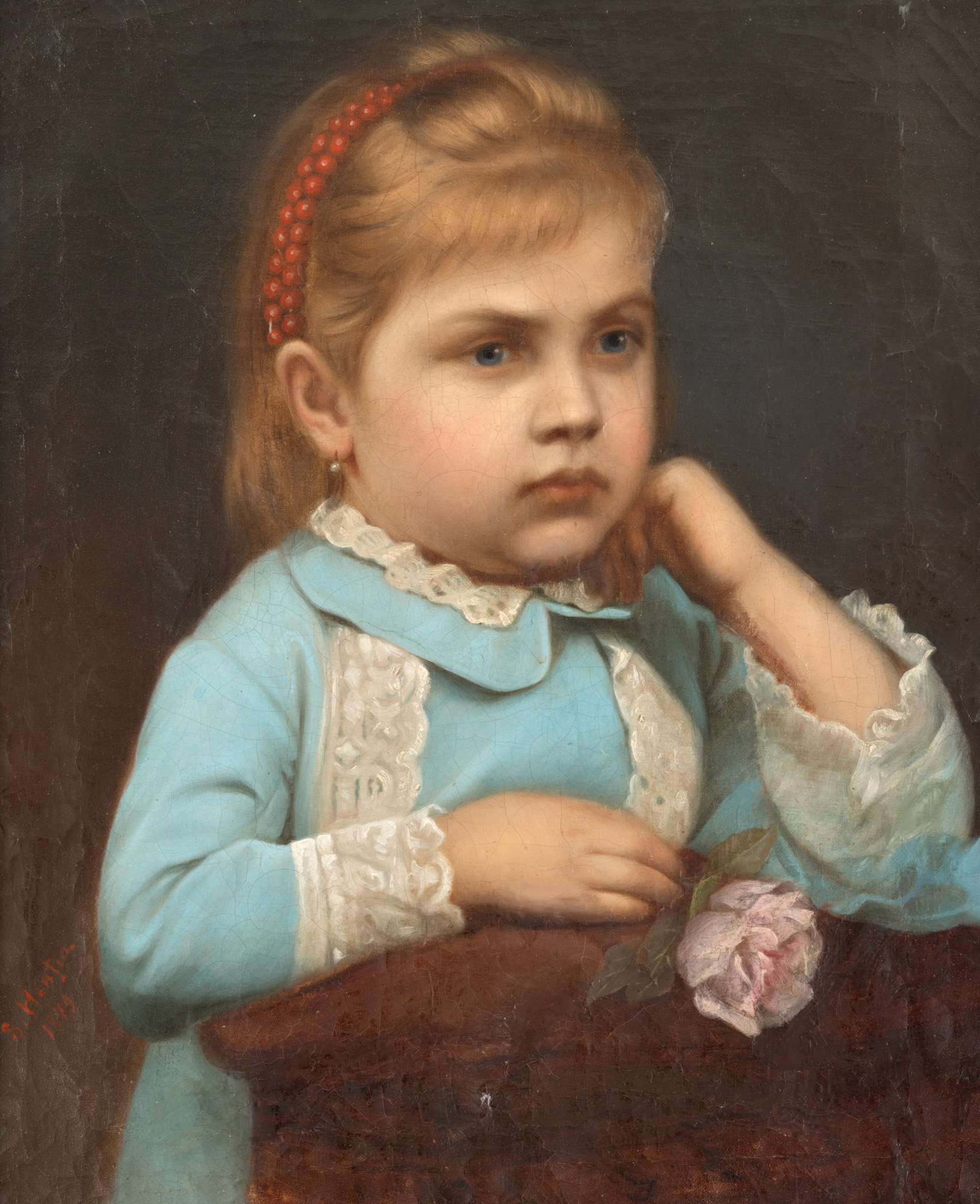
Pink Rose Bud

82. Pink Rose Bud [1879]

Sava Henţia

    Estimate EUR 1.200 - 1.800
    Sold EUR 4.250
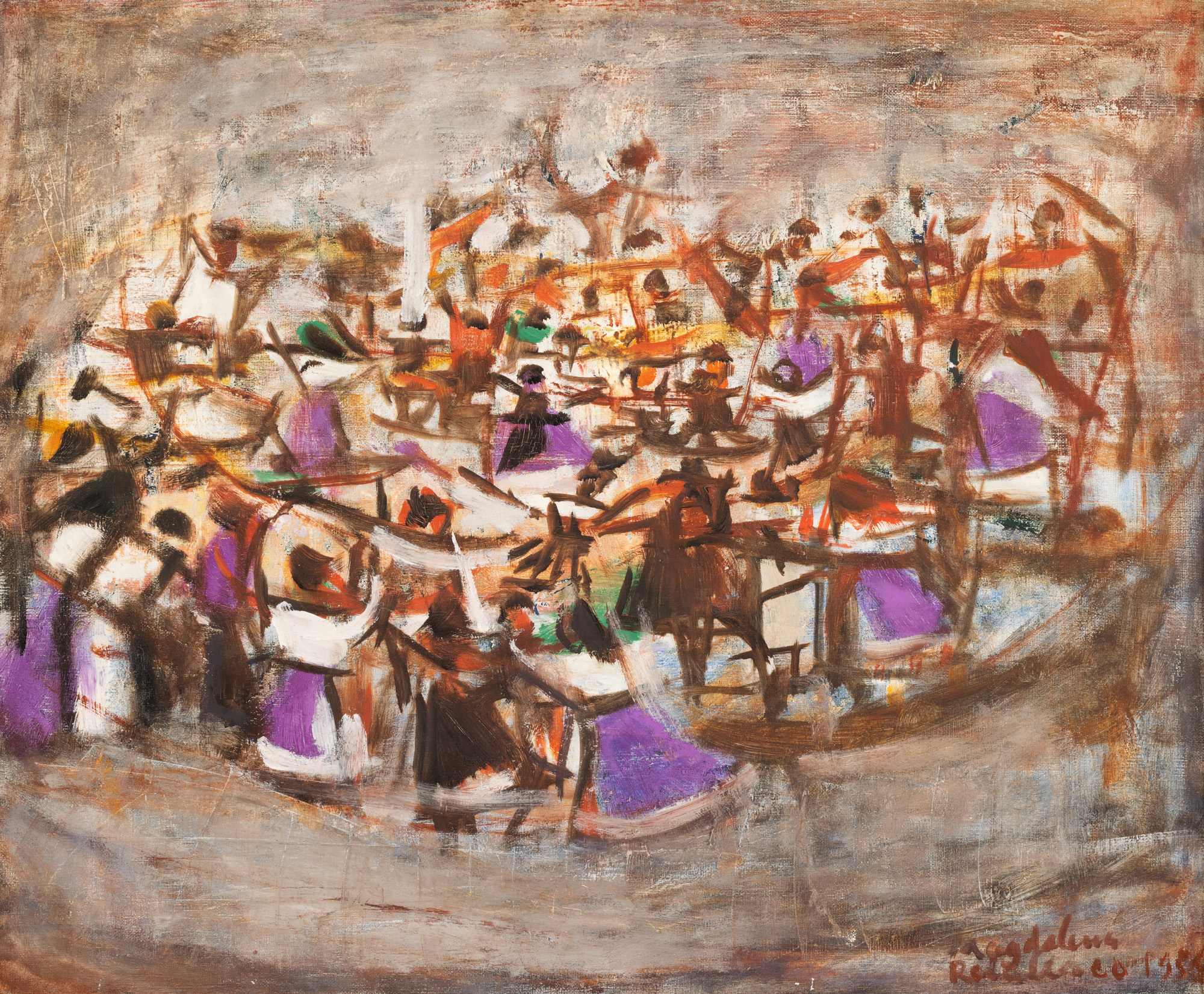
The Great Dance

172. The Great Dance [1956]

Magdalena Rădulescu

    Estimate EUR 1.500 - 2.500
    Sold post auction EUR 1.500