
Meniu

Cum cumpăr
Cum vând
Contact
Contul meu
Română
Cadouri

Carte rară, Documente, Fotografie și Afișe

Artă Religioasă de colecție

Artă Asiatică, Obiecte tehnice, Taxidermie, Curiozități, Antichități

Bijuterie, Ceasuri

Pictură, Sculptură, Gravură

Numismatica, Medalistica, Hărți, Arme și Decorații

Lux, Eleganță, Mașini și Băuturi de colecție

Artă Populară de colecție

Sneakers & Toys

Descopera

Departament de consultanți de artă

Departament de evaluare


213. Sunflowers [1954]
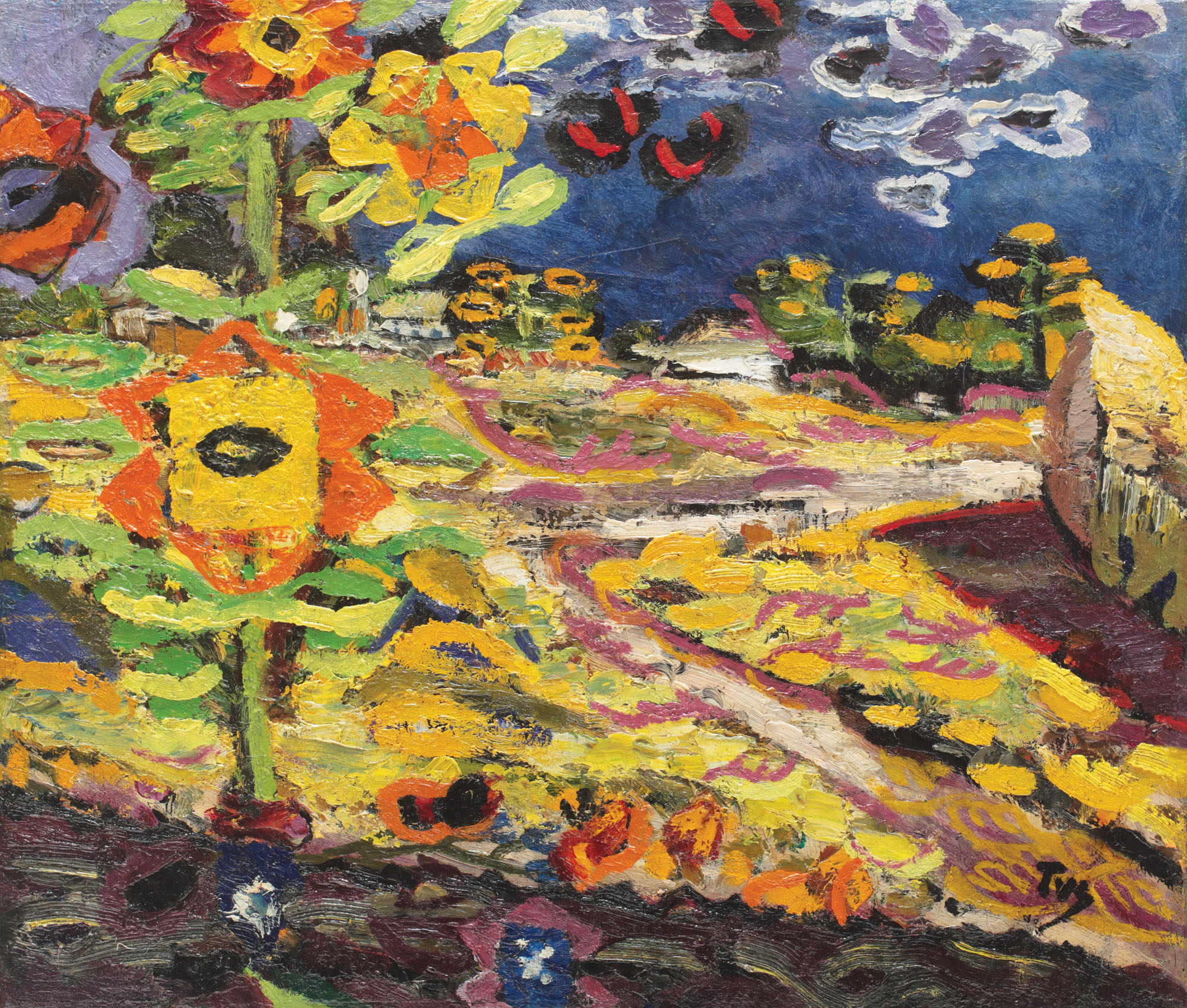
Fotografiile lotului sunt informative și orientative, neputând să asigure o vedere extrem de detaliată a obiectului din toate unghiurile. Recomandăm inspectarea fizică atentă a lotului înainte de licitare. Informații suplimentare în legătură cu starea de conservare, altele decât cele evident vizibile în fotografia/fotografiile lotului, disponibile pe calea formulării unei solicitări aici: Contact.

213. Sunflowers [1954]

1910, Craiova - 1962, Bucureşti

Estimare:
EUR 60.000 - 80.000
Neadjudecat

Bibliografie

CÂRNECI, Magda, “Ion Ţuculescu”, Meridiane, 1984 COMARNESCU, Petru, “Ion Ţuculescu”, Meridiane, 1967

oil on canvas, 46 cm, 54,5, signed bottom right, in black, in monogram, TUC

The presence of Ion Ţuculescu in the history of Romanian Art is unique through its significance: a short moment of synchronism with the Western fine arts. As some art critics point out, Ţuculescu is said to have forced the possible and tried the impossible. Though the equivalent of a miracle revelation, it was only just after his large retrospective exhibition that his work would obtain recognition. His creation can easily be divided into three main stages. The first, defined by pure expressionist colours and lines, is developed along with the artist’s second solo exhibition, in 1939. The second stage spans between 1947-1956 and is known as the „folklore-inspired period”. The third and last stage of his artistic work, the „totemic period”, is the most controversial and debated stage by art critics. Without any exageration, the aesthetics and the abstract tendencies from his last period are not easily assimilated by the Romanian Art due to a unique and inner algorithm of composition. “Floarea soarelui” (1954), mentioned in Petre Comarnescu’s study upon the artwork of Ion Ţuculescu, is part of the artist’s second stage of creation, the folklore inspired period. A memorable piece of work, with a willingly larger than life sunflower on the lefthand side and followed by several others coloured just as brightly as the first one in yellow, under a stormy sky,”Floarea soarelui” is closer to the aesthetics of naive art rather than to those of Van Gogh. The artworks from the folklore inspired period are a tribute to powerful colours, especially orange, yellow and red. They are created in strong variations of colours , but once the eye gets used to them, they become less striking and unusual. The artwork melts into a fusion of colours, lines and shapes, making possible the imaginary realm. With a deep lyrism consisting of colours and shapes, one can distinguish in Ţuculescu’s artwork emotions, love for life, a strong union with an eternal entity and the turn of phrase of a deeply lyrical artist. In the contemporary world of fine arts, confronted with a deep transformation of rules, let us reflect upon Ţuculescu’s artwork, defined by a high quality of balance and innovatory perspectives.

Pentru neclarități în legătură cu procedura de licitare, costurile adjudecării, termenii de garantare, de plată și de ridicare a lotului adjudecat recomandăm citirea/recitirea cu atenție a Regulamentului de Licitare.

Pentru informații suplimentare în legătură cu lotul și licitația contactați Departamentul de Consultanți de Artă.

SESIUNE
Mar, 28 ianuarie 2014 20:15

Alte loturi asemănătoare

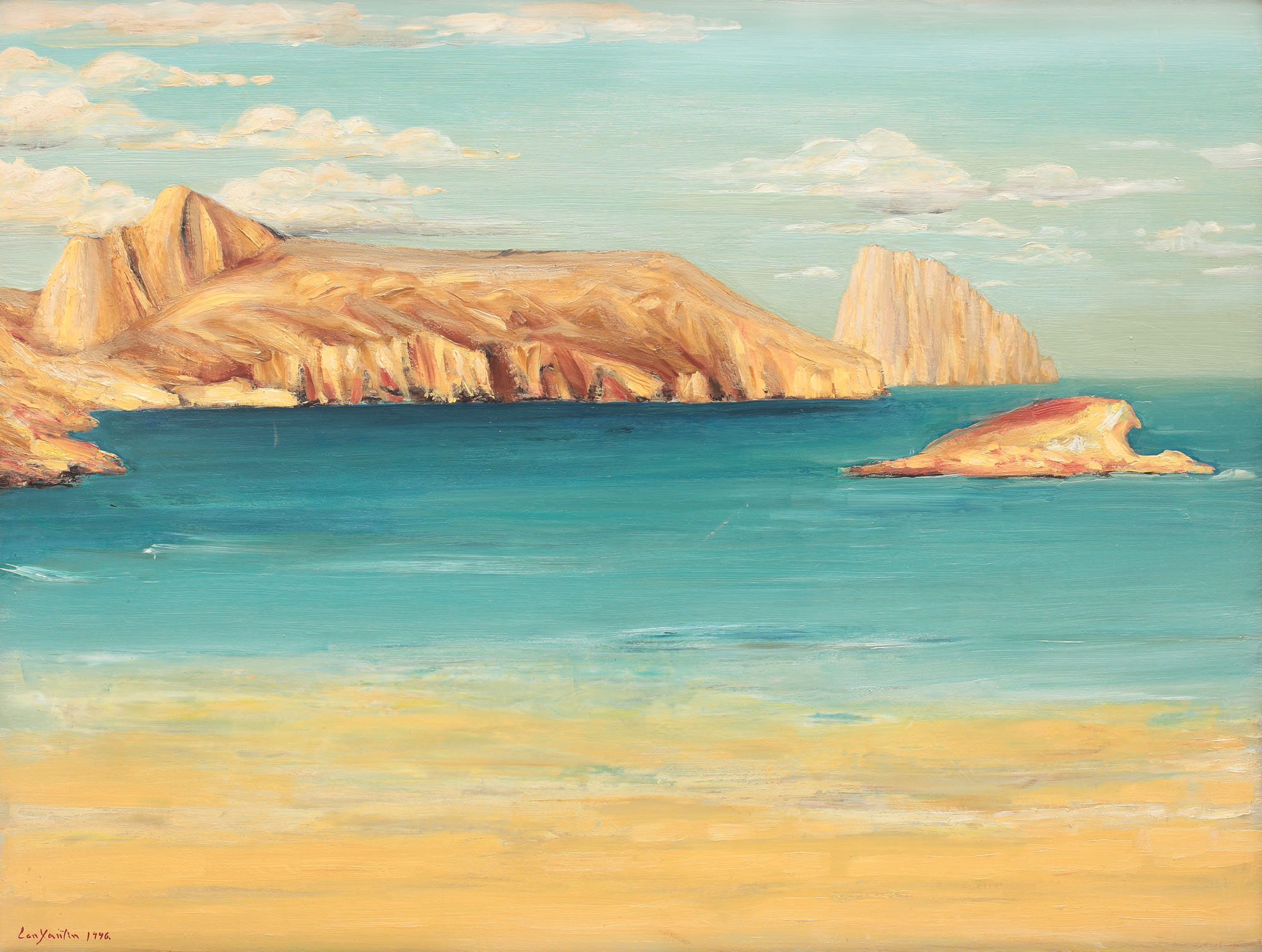
Isleta

190. Isleta [1996]

Constantin Pacea

Constantin Pacea

    Estimare: EUR 900 - 1.500
    Adjudecat post-licitație EUR 900