

The photos of the lot are informative and indicative, and cannot provide a highly detailed view of the object from all angles. We recommend a careful physical inspection of the lot before bidding.
The photos of the lot are informative and indicative, and cannot provide a highly detailed view of the object from all angles. We recommend a careful physical inspection of the lot before bidding.
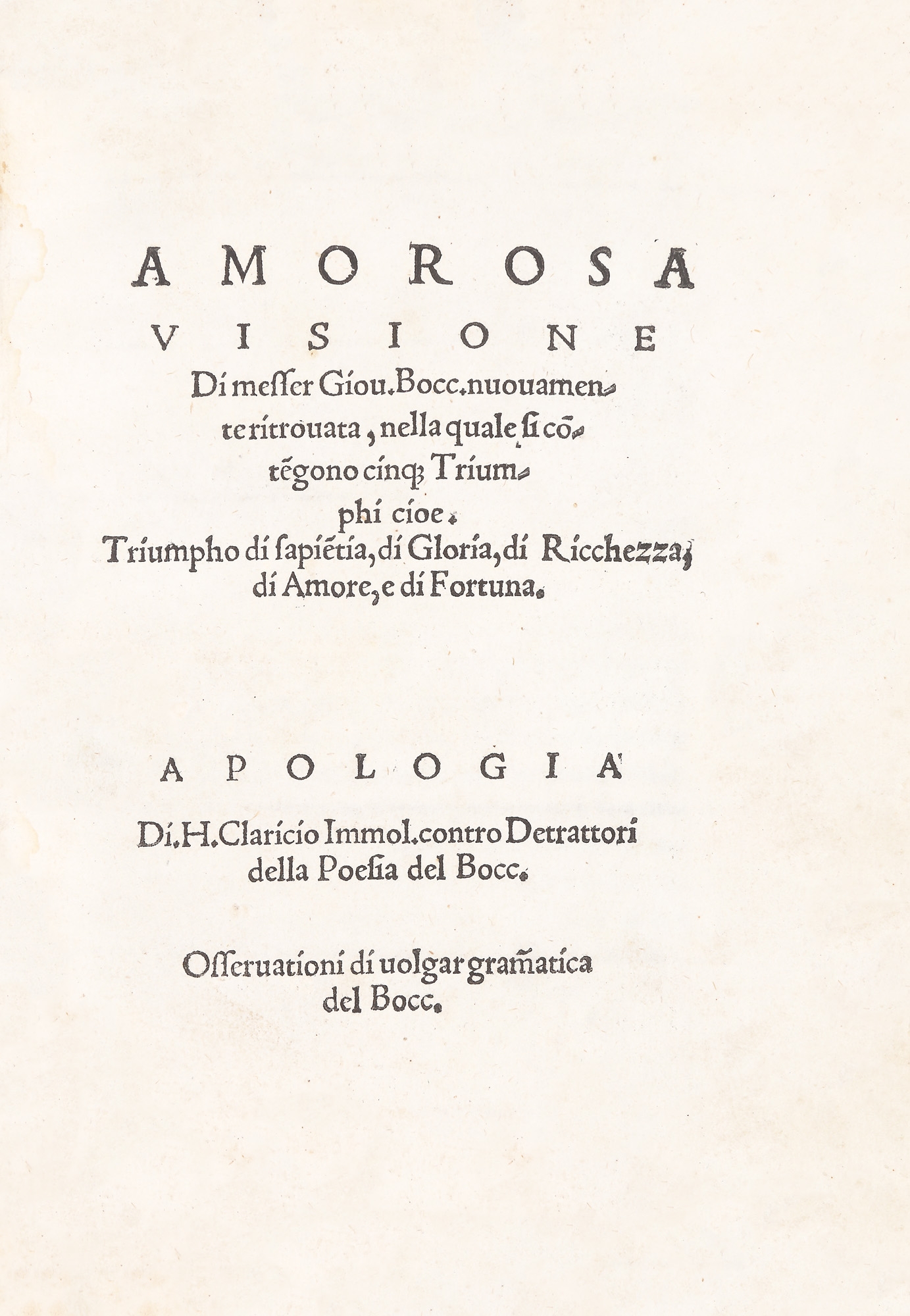
155. "Amorosa vision", by Giovanni Boccacio, Latin, editio princeps, London, 1521, collector’s item
Selling price
Pretul de pornire si cel estimat nu sunt preturi de vanzare efective
EUR 3.500
Session
Thu, 17 November 2022 19:00
Brought to you by
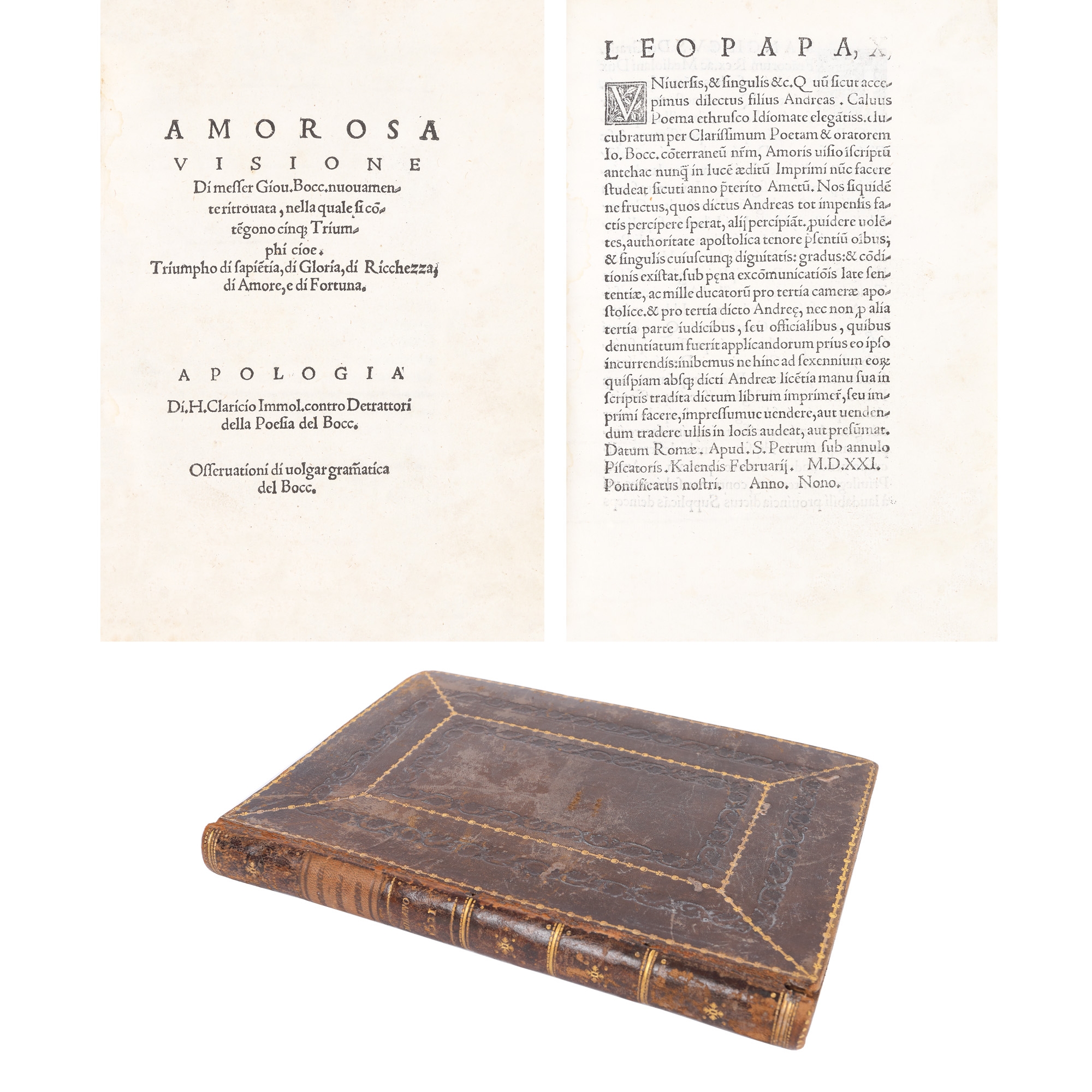
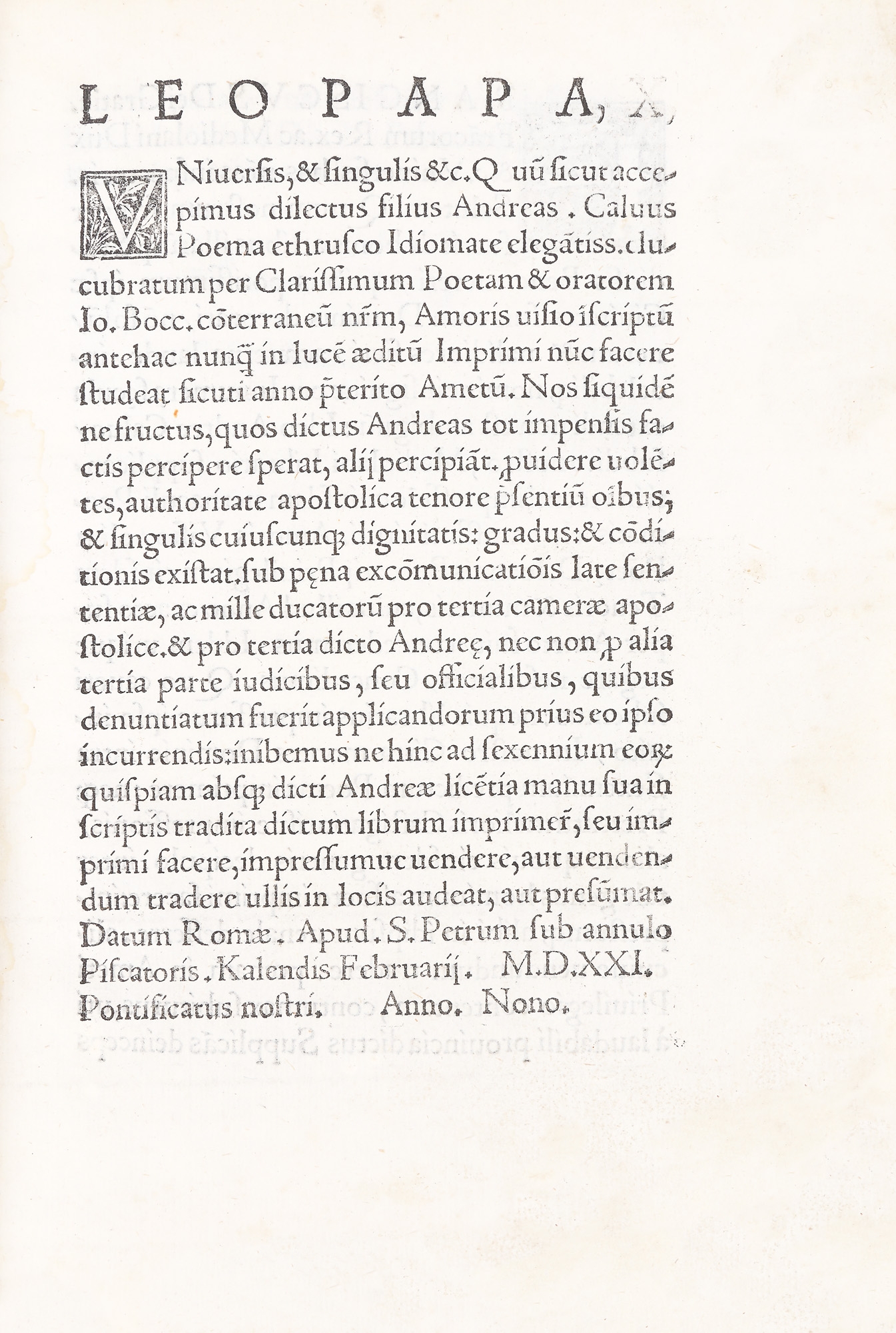
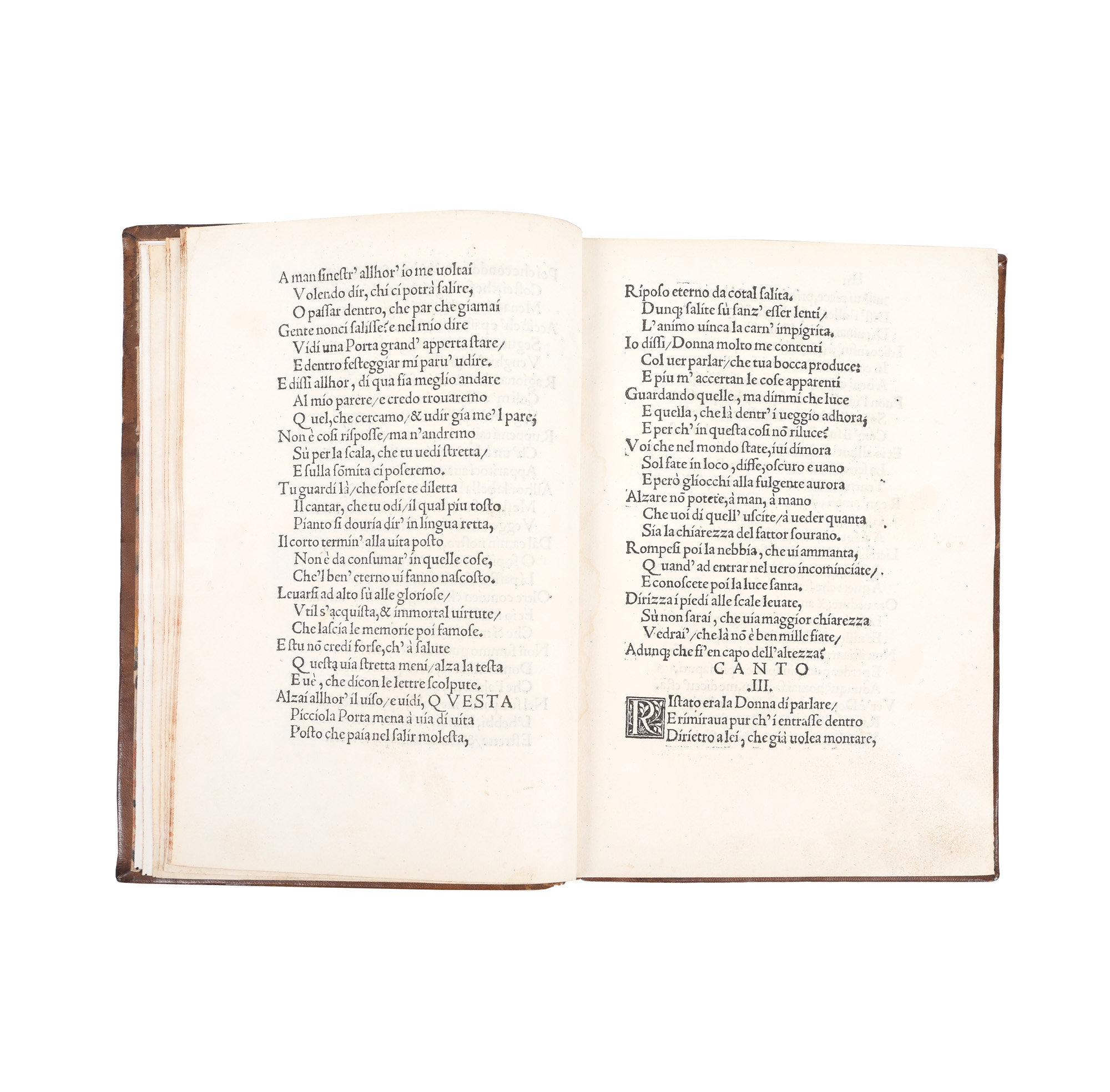
The bibliophile volume, printed in Italian, is preserved in full and has a total of 109 printed pages. The book’s binding is made of cardboard covers wrapped in brown leather, decorated with simple gilded border and a second embossed border. The following is printed on the bookend: "Amorosa visiona". The binding of the book has been restored. The book does not contain historical documentary notes of interest. The specimen is rare, in good condition of preservation and has special cultural heritage value. Amorosa visione is part of Giovanni Boccacio's early writings, and was written in Florence between 1341 and 1343. The vision of love, this famous literary creation, is, in fact, an allegorical pastoral poem, made up of 50 creations, about glory, wealth, love and luck, but, above all, the triumph of love. Amorosa visione saw the light of the printing press in 1521. This post-incunabula, this first edition, is extremely rare and famous, enrolling a simple and clear title page, as all great items: "AMOROSA VISIONE Di messer Giov. Bocc. nuovamen Terittonata, nella quale si cotegono cinq Triumphi cioe. Triumpho di sapietia, di Gloria, di Ricchezza, di Amore, e di Fortuna. APOLOGIA Di H. Claricio Immol. Contro Dtrattori della Poesia del Bocc. Osservatiuoni di volgar gramatica del Bocc.". The poetic creation is accompanied, on the last 21 pages, by the polemic Apologia of Girolamo Claricio (1470-1521), in defense of Boccacio's poetic creation. Edited by Zanotti Castiglione (Castillionus Silvaticus) of Milan, with expenses covered by Andrea Calvo, the print appeared in London in February 1521, and was followed, during the 16th century, by three other editions. Humanist Giovanni Boccacio (1313-1375) is considered one of the greatest Italian poets. He pursued theological and philological studies, opting, like Petrarch, for the humanistic literary culture, working in Florence, Ravenna and Naples; he spent time in the court of King Robert d’Anjou, where he met Maria de Conti d’Anjou, the illegitimate daughter of the king, with whom he had amorous relations and whose face he immortalized in many of his poetic creations, such as the following. Humanism represented the progressive philosophy of life that draws from all his writings, written in Latin and Italian, represented by a large number of stories and lyrics, with poetry being his second religion.
Dimensions
custom 21 x 15 cm
ADDITIONAL INFORMATION
For clarifications regarding the bidding procedure, hammer price costs, guarantee, payment, and collection terms for the winning lot, we recommend carefully reading/re-reading the Bidding Regulations.
For additional information regarding the lot and the auction, please contact the Art Consultants Department.
Detalii
The bibliophile volume, printed in Italian, is preserved in full and has a total of 109 printed pages. The book’s binding is made of cardboard covers wrapped in brown leather, decorated with simple gilded border and a second embossed border. The following is printed on the bookend: "Amorosa visiona". The binding of the book has been restored. The book does not contain historical documentary notes of interest. The specimen is rare, in good condition of preservation and has special cultural heritage value. Amorosa visione is part of Giovanni Boccacio's early writings, and was written in Florence between 1341 and 1343. The vision of love, this famous literary creation, is, in fact, an allegorical pastoral poem, made up of 50 creations, about glory, wealth, love and luck, but, above all, the triumph of love. Amorosa visione saw the light of the printing press in 1521. This post-incunabula, this first edition, is extremely rare and famous, enrolling a simple and clear title page, as all great items: "AMOROSA VISIONE Di messer Giov. Bocc. nuovamen Terittonata, nella quale si cotegono cinq Triumphi cioe. Triumpho di sapietia, di Gloria, di Ricchezza, di Amore, e di Fortuna. APOLOGIA Di H. Claricio Immol. Contro Dtrattori della Poesia del Bocc. Osservatiuoni di volgar gramatica del Bocc.". The poetic creation is accompanied, on the last 21 pages, by the polemic Apologia of Girolamo Claricio (1470-1521), in defense of Boccacio's poetic creation. Edited by Zanotti Castiglione (Castillionus Silvaticus) of Milan, with expenses covered by Andrea Calvo, the print appeared in London in February 1521, and was followed, during the 16th century, by three other editions. Humanist Giovanni Boccacio (1313-1375) is considered one of the greatest Italian poets. He pursued theological and philological studies, opting, like Petrarch, for the humanistic literary culture, working in Florence, Ravenna and Naples; he spent time in the court of King Robert d’Anjou, where he met Maria de Conti d’Anjou, the illegitimate daughter of the king, with whom he had amorous relations and whose face he immortalized in many of his poetic creations, such as the following. Humanism represented the progressive philosophy of life that draws from all his writings, written in Latin and Italian, represented by a large number of stories and lyrics, with poetry being his second religion.
ADDITIONAL INFORMATION
For clarifications regarding the bidding procedure, hammer price costs, guarantee, payment, and collection terms for the winning lot, we recommend carefully reading/re-reading the Bidding Regulations.
For additional information regarding the lot and the auction, please contact the Art Consultants Department.
Dimensions
custom 21 x 15 cm
Brought to you by
Similar lots
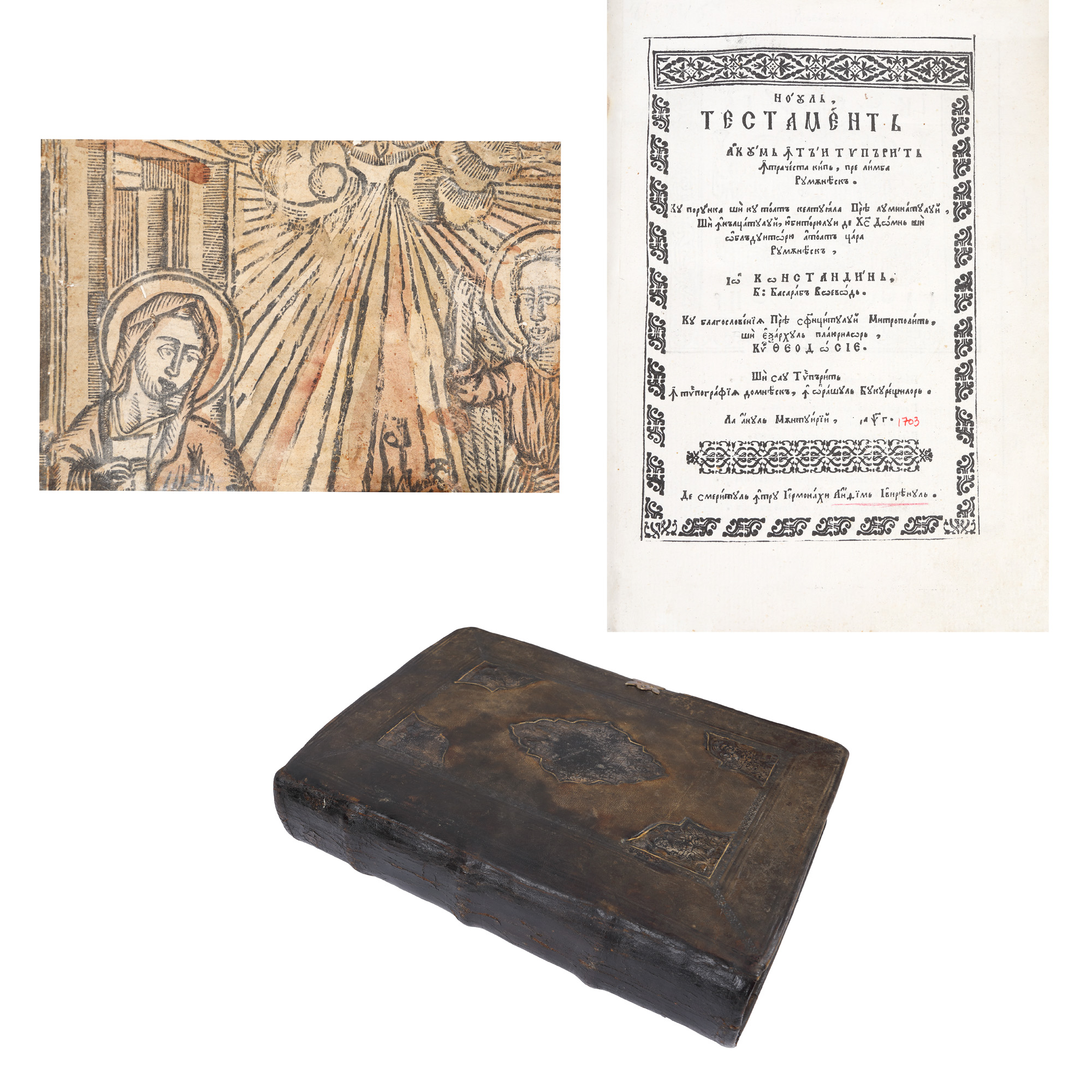
49. "Noul Testament" ("The new testament") of Antim Ivireanul, from the time of Constantin Brâncoveanu, Bucharest, 1703, extremely rare, collector’s item
Starting price
EUR 1.000
Sold
EUR 4.000