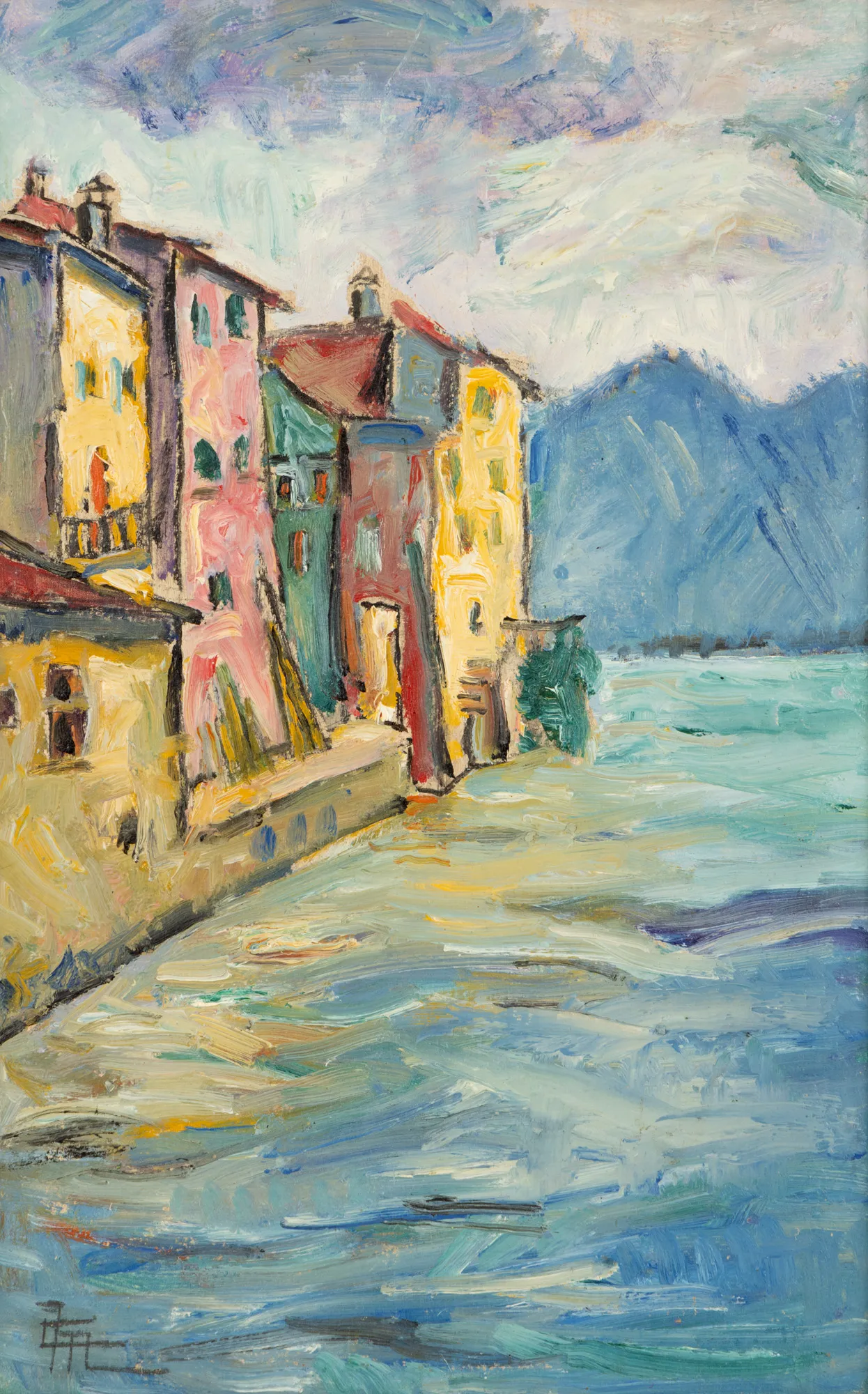
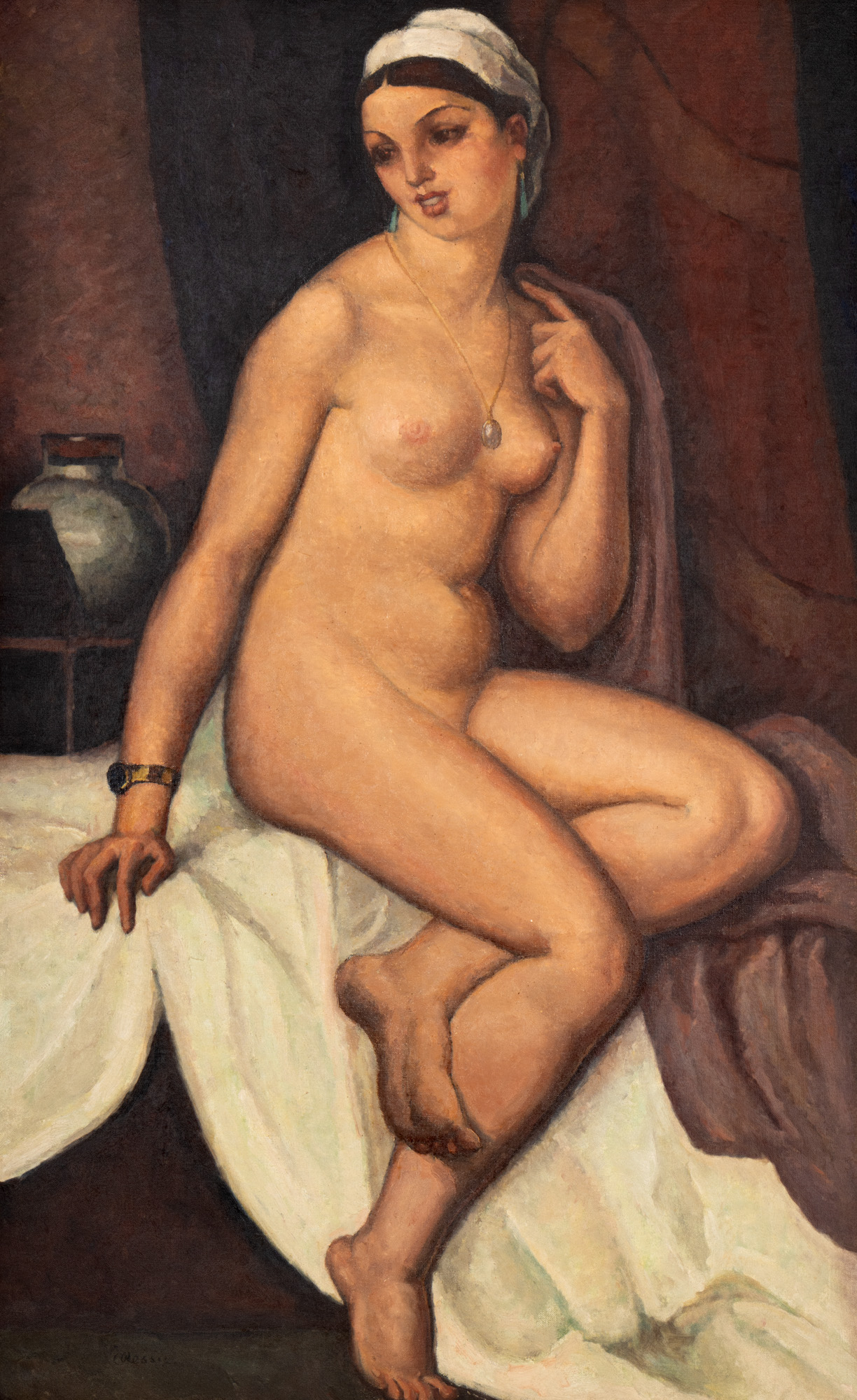
The photos of the lot are informative and indicative, and cannot provide a highly detailed view of the object from all angles. We recommend a careful physical inspection of the lot before bidding.
ȘORBAN Raoul, "Theodor Pallady", Meridiane Publishing House, Bucharest, 1975.
BLAZIAN, H., "Pallady", State Publishing House for Literature and Art, Bucharest, 1957.
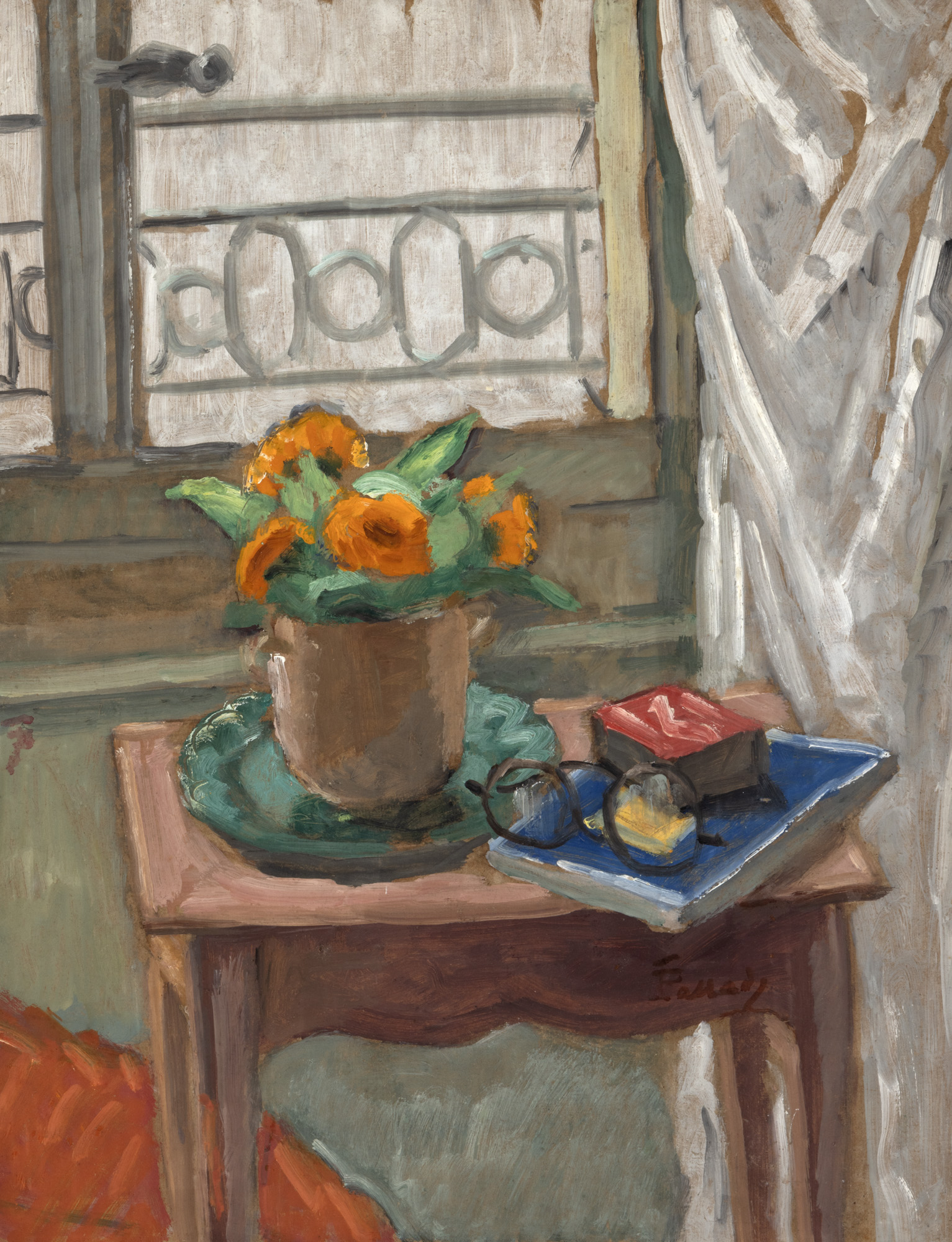
oil on cardboard, 61.5 x 48.5 cm, signed in the center right, with brown, "T. Pallady"
Inspired by the landscapes and inhabitants of the Seine, the artist dedicated many works to this subject during the period of 1900-1916. However, he stopped at his own vision and personal experiences, without going beyond this horizon. Gradually, Pallady assimilated the major artistic currents proposed by his predecessors in the quest and perfecting of his own pictorial manner. His desire to capture the landscape, predominantly the cityscape, developed along with the numerous trips abroad during the years 1889 to continue his artistic studies. Pallady demonstrates unparalleled refinement through the integration of clear chromatic rhythms, luminous, in the twilight atmosphere of the city.
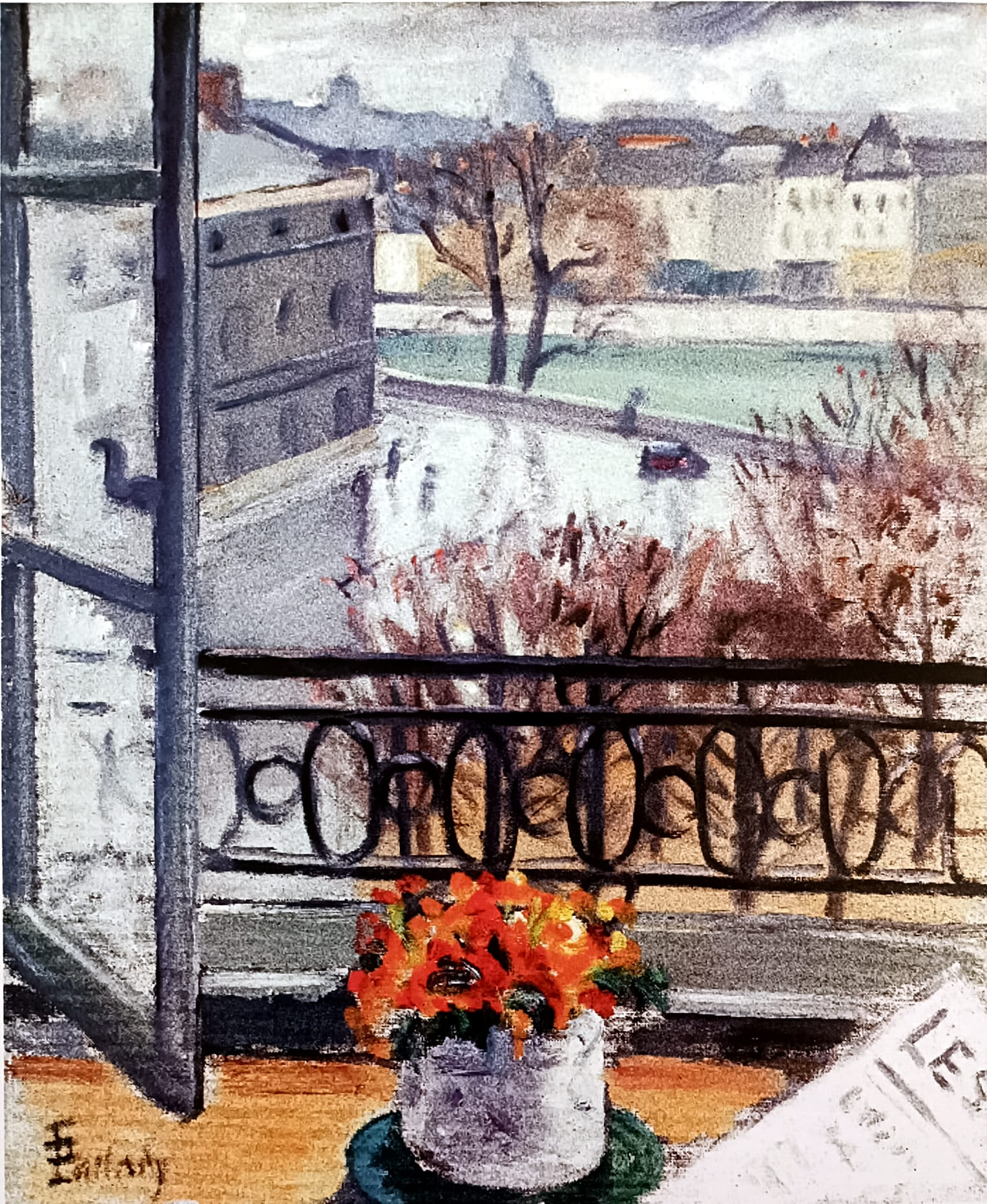
During his time in Paris, the artist reveals his preference for wide perspectives and the water motif. The Seine becomes a leitmotif, and cultural buildings such as the Eiffel Tower and Notre-Dame Cathedral will be captured in his works such as: "Parisian Landscape", "Still Life with Newspaper and Poppies", "View of the Seine", "Interior with Vase and Sage", "Quay on the Seine (towards Pont des Arts)" or "The Quays of the Seine". His thematic repertoire consists of landscapes, nudes, interiors, and beyond these, his work is also built around still nature with flowers.
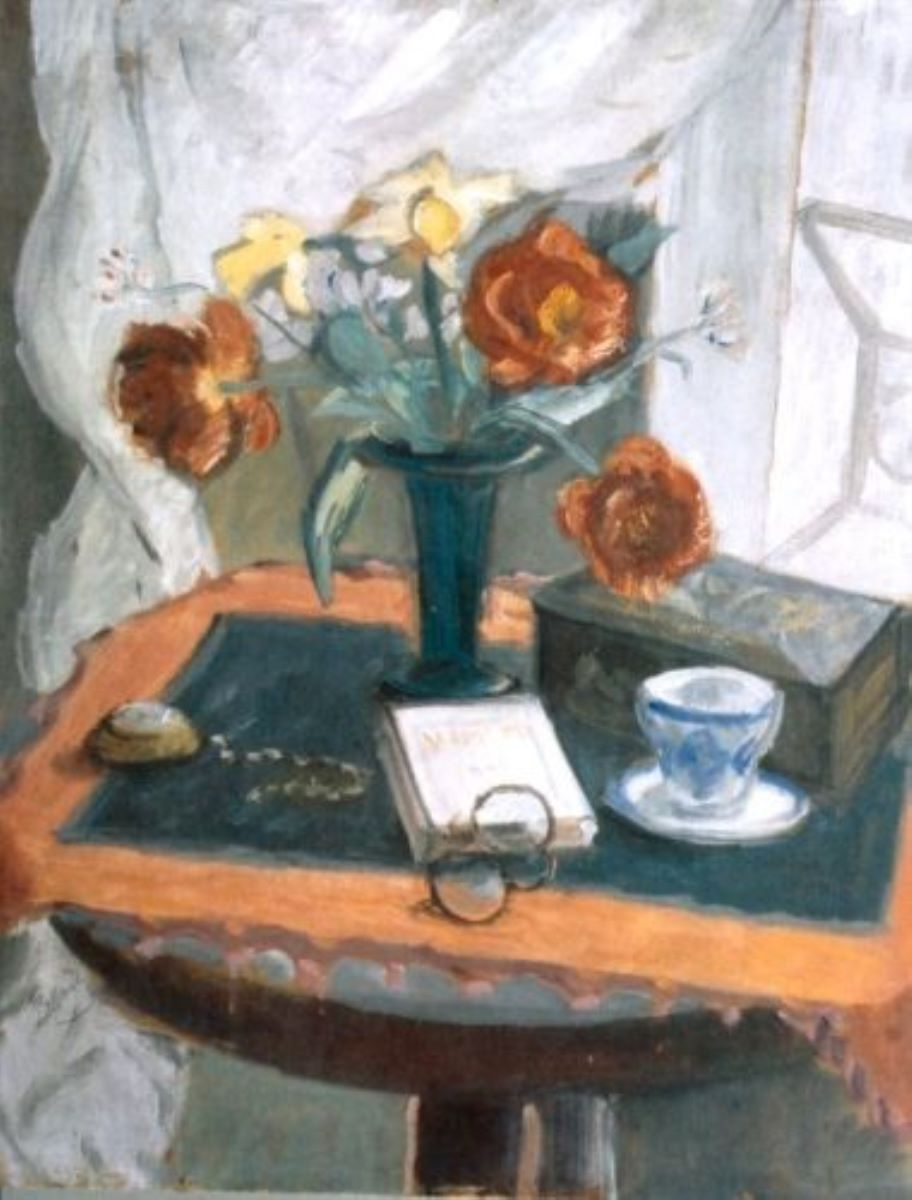
Pallady's nature, translated into a painting, is reconstructed from lines, colors, shapes, contrasts, and ratios, all abstract elements unless expressing attitudes towards the destiny of man and not involved in a moment of life depicted through the motif. The still nature will be approached by Pallady in the maturity part of his life, the years of 1920-1930, where he will try to paint and refer to important artists such as Baudelaire, Proust or Nietzsche, and a few examples in this regard are: "Still Life with Red Flowers", "Elder Flowers and Lemons", "Innkeepers with Clock" or "Still Life with Flowers".
Pallady's predilection for still nature denotes the desire to represent in a painting a fragment of the universal reality, but also a complete freedom in what concerns the spirit of construction and synthesis, in the prospect of seeking and creating an order and a harmonious balance.
As for the work at hand, which we can place in his period of maturity, the years 1920-1930, the central interest is represented by a still nature with poppies, books, a pair of glasses that are placed on a table, and a window that gives us the chance to see it is a view to Place Dauphne. All these create an apparent balance that is also remarkable in the case of assembling forms and coloration, based on which Pallady combines harmoniously to create relationships and compositional nuances particular to his works.
More than a still nature, in this work each object carries a sense, and their juxtaposition and warm colors create a feeling of melancholy, escape and dreaming that Pallady wants to convey through them, the idea of the passage of time and life: orange flowers can suggest in his vision, youth due to natural and fresh color, books and glasses the idea of novelty, knowledge and informing to always find out what is happening in society, and the window knowledge and interaction, where all these create an ordinary daily life, but also an absolute and attentively accomplished balance by the artist. (S.S)
For clarifications regarding the bidding procedure, hammer price costs, guarantee, payment, and collection terms for the winning lot, we recommend carefully reading/re-reading the Bidding Regulations.
For additional information regarding the lot and the auction, please contact the Art Consultants Department.
By choosing "Accept all cookies" you agree to the use of cookies to help us provide you with a better user experience and to analyse website usage. By clicking "Adjust your preferences" you can choose which cookies to allow. Only the essential cookies are necessary for the proper functioning of our website and cannot be refused
Cookie settings
Our website stores four types of cookies. At any time you can choose which cookies you accept and which you refuse. You can read more about what cookies are and what types of cookies we store in our Confidentiality Policy.
are necessary for technical reasons. Without them, this website may not function properly.
are necessary for specific functionality on the website. Without them, some features may be disabled.
allow us to analyse website use and to improve the visitor's experience.
allow us to personalise your experience and to send you relevant content and offers, on this website and other websites.