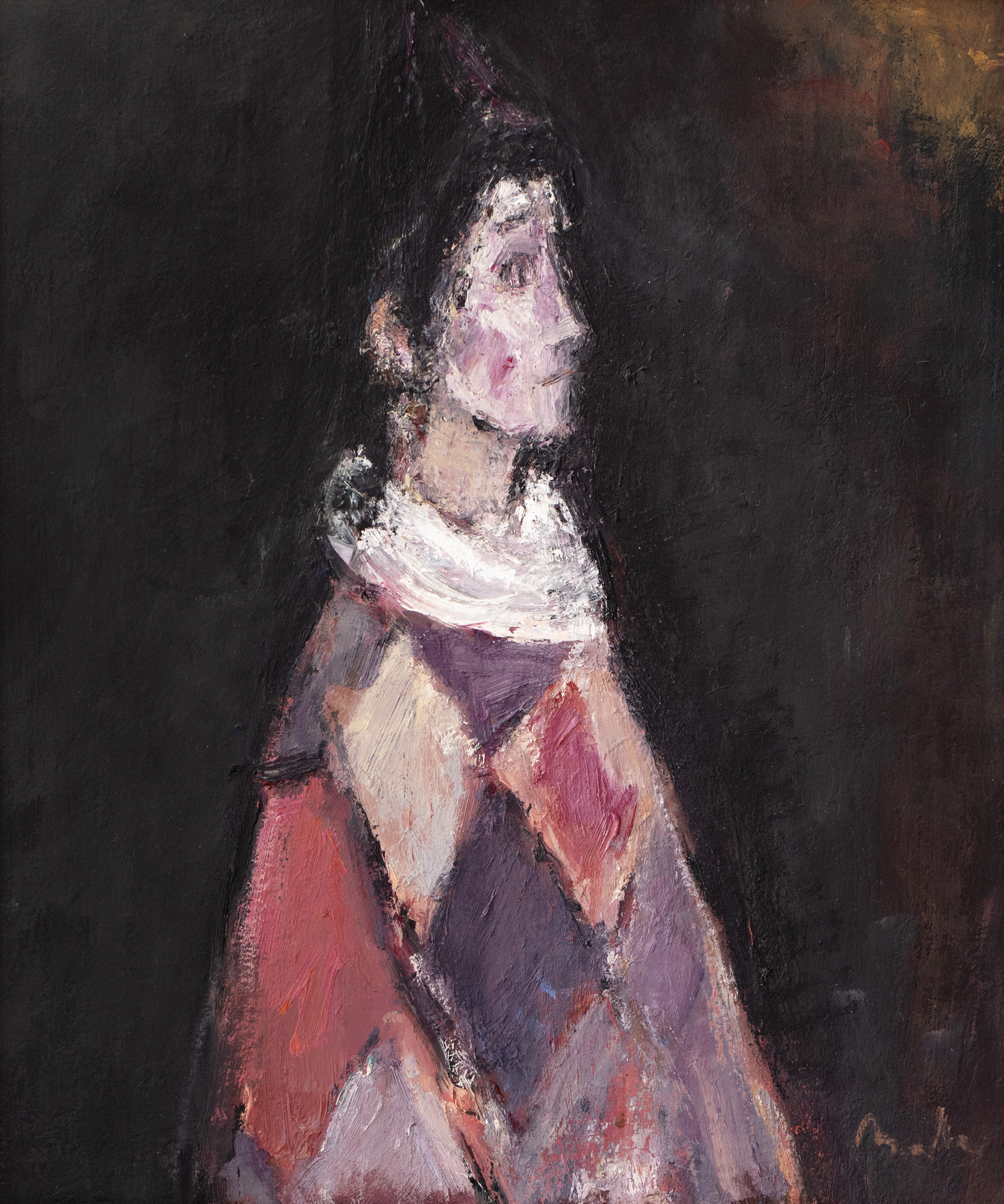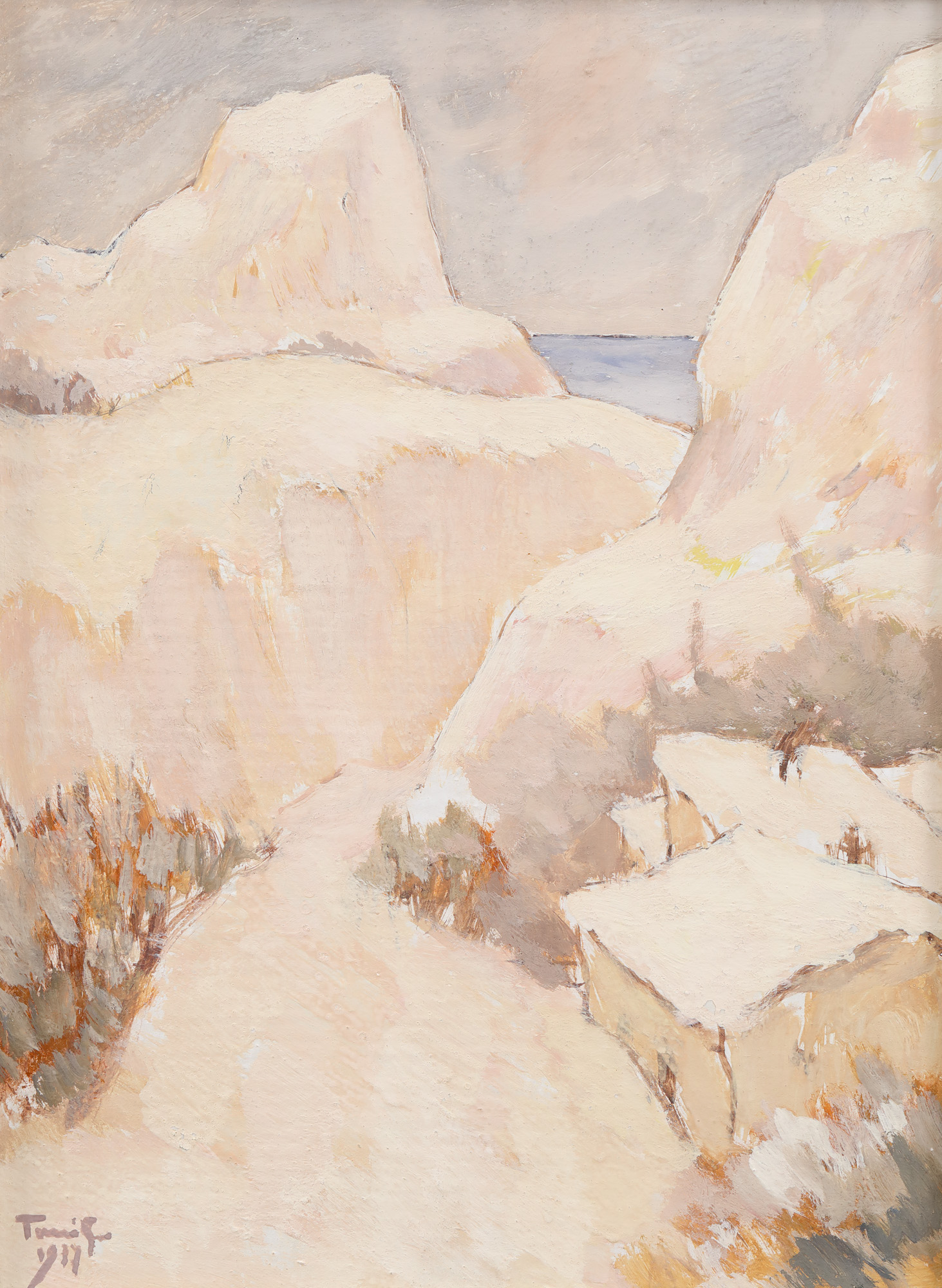

151. A Harlequin [cca. 1974]

1906, Craiova - 1997, Bucureşti

Estimate

EUR 6.000 - 9.000

Sold

EUR 8.000

Session

Tue, 18 June 2024 19:00

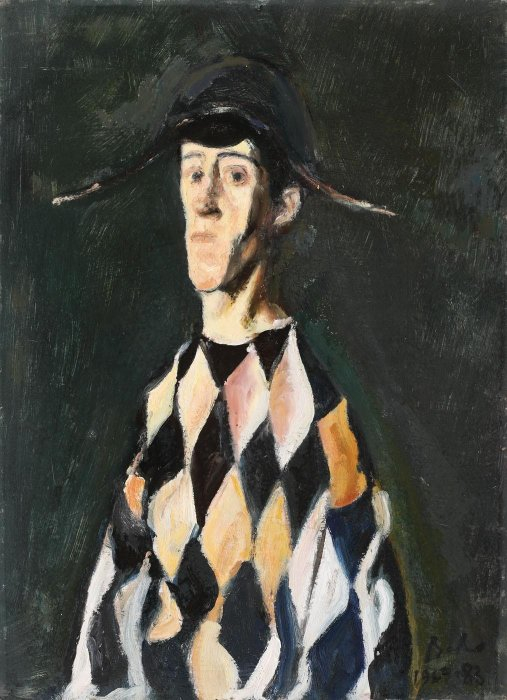
Corneliu Baba's predilection for the human figure acquires an unpredictable and spectacular dynamic especially in portraits. The roots of his portraiture expressions are revealed from early on: in high school, Corneliu Baba was known as the "portraitist of the town": most of the notable personalities of Caransebeș posed for him. He gradually creates self-portraits, portraits of close ones or of renowned names such as: Tonitza, Enescu, Sadoveanu and Arghezi, or he focuses on specific subjects: the mad king, peasants or the harlequin. The physiognomy, the face, and the inner features of the characters stand out, in Baba, as a vehicle of human psychologies. The artist symbolically dedicates archetypes such as the harlequin or the mad king and transposes them, throughout his career, into a long series of pictorial motifs. For Corneliu Baba, the notion of realism takes on a much broader meaning and enjoys the artist's ability to use his imagination and psychic reserves. He thus heads towards the figure of the carnival character, detached from the ranks of Commedia dell’Arte. Over time, the harlequin has received a central place in modern painting. We followed his journey in plastic works from Picasso to Tonitza, and we now see him in the position of Corneliu Baba's "anonymous friend", as the artist himself presents him. The harlequin appears more in the guise of embodying a sad comedy, disguised in colorful travesties. He is melancholic and tormented by troubles and disappointments, but offers the artist a varied range of chromatic interpretations and compositional alternations. The idea of the harlequin is no longer reduced to a particular character, as is the case with other portraits made by the artist, but refers to an entire typology. The model in this work thus becomes a moral compass and a meditation on the human condition. Baba's harlequin long ago stepped out of his role and reveals himself in the intimate atmosphere behind the curtain, where he can freely express feelings of ataraxia and alienation. In the quiet before the spectacle, the smile is no longer necessary, giving way to spasms that transpose in the fallen corners of the mouth and then develop into a whole plethora of well-defined body languages. By adopting this theme, Corneliu Baba captures the ambiguity of existence, the dramatic dimension and the iconography of the mask that significantly mitigates the humanity of the characters.

References

ȘUȘARĂ, Pavel, "Corneliu Baba", Official Monitor Publishing House, Bucharest, 2013.

Dimensions

width 30 cm, height 35 cm

Description

oil on HDF, signed lower right, with ochre, "Baba"

Research information

A version of the work is found in the collection of the National Museum of Art, Bucharest. The work is reproduced in the magazine "AnticArt Magazine", November-December 2006, on page 9.

Dating

cca. 1974

ADDITIONAL INFORMATION

For clarifications regarding the bidding procedure, hammer price costs, guarantee, payment, and collection terms for the winning lot, we recommend carefully reading/re-reading the Bidding Regulations.

For additional information regarding the lot and the auction, please contact the Art Consultants Department.

Similar lots